
A Treatise on Painting
A Treatise on Painting is a collection of writings written by Leonardo da Vinci in 1632.
Leonardo argues that painting can be treated as a science and that it is in fact a superior art to others such as music or poetry, offering his arguments in this regard.
It is of vital importance to know the aesthetic ideas that emerged in the Renaissance from the pen of one of the great artists of the time.
Despite having a somewhat technical language, it is a book accessible to anyone with more or less knowledge of the arts. It also has a very interesting philosophical part where Leonardo also refers to classical thinkers such as Plato and Aristotle.
This edition of A Treatise on Painting is based on John Francis Rigaud's translation.
"Chap. I.—What the young Student in Painting ought in the first Place to learn.The young student should, in the first place, acquire a knowledge of perspective, to enable him to give to every object its proper dimensions: after which, it is requisite that he be under the care of an able master, to accustom him, by degrees, to a good style of drawing the parts".
Your download has started
PDF · A Treatise on Painting — didn't start? Download again
Also available: PDF · EPUB · MOBI · Read online
Read it on a Kindle
Download the EPUB and send it with Amazon's Send to Kindle (web, app, or your kindle.com email). Modern Kindles accept EPUB directly — no conversion needed.
On iPhone or iPad
Tap the downloaded file, then "Open in Books". It opens in Apple Books, with your reading progress synced across your devices.
On Android
Open the file with Google Play Books or any EPUB reader (ReadEra, Moon+ Reader). PDFs open in any viewer.
On your computer
PDFs open anywhere. For EPUB, try Calibre or Thorium Reader — both free and excellent.
Public domain (US)·No sign-up·DRM-free·Real text, not scans
Copyright note. A Treatise on Painting by Leonardo da Vinci is believed to be in the public domain in the United States only. It may still be copyrighted in other countries. If you are not in the United States, please check your local laws to ensure this eBook is in the public domain in your country before downloading A Treatise on Painting in PDF or EPUB.
- Pages
- 496
- Reading time
- 7 hours 16 minutes
- Pace
- Intermediate
- First published
- 1632
- Language
- Italian
- Downloads
- 2,835
394 years later, still timely
Why Read A Treatise on Painting in 2026?
Leonardo da Vinci wrote a studio notebook that reads like a master class: how light behaves, how bodies turn, why observation beats ornament. Painters, photographers, and designers can use these notes to train the eye. Practical, tightly argued, and modern about craft as daily discipline.
Today's connection
Use as a companion beside the sketchbook or camera. Chapters give clear rules of thumb for perspective, anatomy, and shadow, while inviting patient looking over quick effect. A fine bridge between historical theory and everyday making.
Light and shadow
Clear guidance for convincing form.
Train the eye
Observation before ornament, patience before polish.
Working principles
Rules of thumb that travel across mediums.
Share this book
About the author
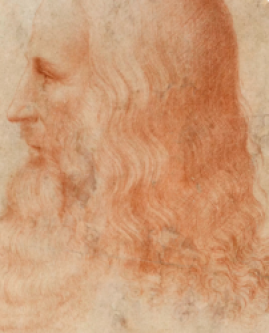
Leonardo da Vinci
Notebooks of art and inquiry; observation turned into machines, anatomy, and vision.