Eugene Onegin
Eugene Onegin is a novel in verse written by Alexander Pushkin, published in instalments between 1825 and 1832 and issued as a complete edition in 1833.
The story, set in early 19th century Tsarist Russia, introduces us to the young Eugene Onegin. He does nothing of consequence and fills his days with parties, the theater, and other entertainments.
He is the heir to his uncle's estate, and one day he is told that his uncle is dying and wants him to come out to the country. After the visit and his uncle's death, he decides that a change of scenery might be good for him and decides to stay and live in the country.
And there Onegin, who thinks he knows everything about love, meets Tatiana, whose only knowledge of love comes from romance novels.
Tatiana writes to him and Onegin turns her down. His friendship with the young poet Lensky then ends in a duel that leaves Lensky dead, and Onegin leaves the estate. Years later he meets Tatiana again in Saint Petersburg, married and settled, and it is his turn to be refused.
The novel gives us a great insight into the two spheres of Russian society at that time: the urban and the rural.
This edition of Eugene Onegin is based on the English translation by Henry Spalding.
Your download has started
PDF · Eugene Onegin — didn't start? Download again
Also available: PDF · EPUB · MOBI · Read online
Read it on a Kindle
Download the EPUB and send it with Amazon's Send to Kindle (web, app, or your kindle.com email). Modern Kindles accept EPUB directly — no conversion needed.
On iPhone or iPad
Tap the downloaded file, then "Open in Books". It opens in Apple Books, with your reading progress synced across your devices.
On Android
Open the file with Google Play Books or any EPUB reader (ReadEra, Moon+ Reader). PDFs open in any viewer.
On your computer
PDFs open anywhere. For EPUB, try Calibre or Thorium Reader — both free and excellent.
Public domain (US)·No sign-up·DRM-free·Real text, not scans
Copyright note. Eugene Onegin by Alexander Pushkin is believed to be in the public domain in the United States only. It may still be copyrighted in other countries. If you are not in the United States, please check your local laws to ensure this eBook is in the public domain in your country before downloading Eugene Onegin in PDF or EPUB.
- Pages
- 275
- Reading time
- 3 hours 25 minutes
- Pace
- Intermediate
- First published
- 1833
- Language
- Russian
- Downloads
- 4,163
193 years later, still timely
Why Read Eugene Onegin in 2026?
A novel that moves like music: duels, gossip, letters, and a love mistimed. Pushkin’s verse is quick, witty, and clear, turning manners into drama and regret into melody. The cadence feels modern—and the consequences of waiting too long feel painfully real.
Today's connection
Read it aloud or in nimble bursts: the stanza form keeps momentum while revealing character with surgical economy. It's ideal for readers who enjoy language, social comedy, and the anatomy of choice. Themes—status, boredom, timing—map neatly onto today's etiquette and attention habits.
Verse that moves
Meter and rhyme power the plot.
Love and timing
Signals missed, chances lost.
Society as chorus
Salons, reputation, and wit.
These collections include Eugene Onegin



Share this book
About the author
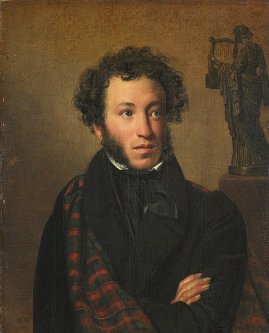
Alexander Pushkin
Foundational lyric and narrative sparkle; style that still sets the standard.