Euthyphro
Euthyphro is a philosophy work written by Plato between 339 and 395 B. C.
It is one of Plato's early dialogues, and its main theme is the nature of piety and religion.
The dialogue introduces Socrates and Euthyphro as they await an audience with the king. Euthyphro is appearing before the court to denounce the murder of his father, while Socrates is about to be tried for corrupting the youth of Athens.
At this meeting, Socrates begins a dialogue with Euthyphro about the true nature of piety. Both reflect on morality, religion, or divine authority versus human ethics.
"Socrates: What is the charge? Well, a very serious charge, which shows a good deal of character in the young man, and for which he is certainly not to be despised. He says he knows how the youth are corrupted and who are their corruptors. I fancy that he must be a wise man, and seeing that I am the reverse of a wise man, he has found me out, and is going to accuse me of corrupting his young friends. And of this our mother the state is to be the judge".
This edition of Euthyphro is based on the English translation by Benjamin Jowett.
Your download has started
PDF · Euthyphro — didn't start? Download again
Also available: PDF · EPUB · MOBI · Read online
Read it on a Kindle
Download the EPUB and send it with Amazon's Send to Kindle (web, app, or your kindle.com email). Modern Kindles accept EPUB directly — no conversion needed.
On iPhone or iPad
Tap the downloaded file, then "Open in Books". It opens in Apple Books, with your reading progress synced across your devices.
On Android
Open the file with Google Play Books or any EPUB reader (ReadEra, Moon+ Reader). PDFs open in any viewer.
On your computer
PDFs open anywhere. For EPUB, try Calibre or Thorium Reader — both free and excellent.
Public domain (US)·No sign-up·DRM-free·Real text, not scans
Copyright note. Euthyphro by Plato is believed to be in the public domain in the United States only. It may still be copyrighted in other countries. If you are not in the United States, please check your local laws to ensure this eBook is in the public domain in your country before downloading Euthyphro in PDF or EPUB.
- Pages
- 31
- Reading time
- 46 minutes
- Pace
- Intermediate
- First published
- -395
- Language
- Ancient Greek
- Downloads
- 2,074
2421 years later, still timely
Why Read Euthyphro in 2026?
Outside a courthouse, Socrates asks whether the good is loved because it is good, or good because it is loved. The short exchange is clear, stubborn, and foundational for ethics. It shows how a question can unstick a whole system.
Today's connection
Law, religion, and morality collide in public life. This dialogue supplies a clean tool for thinking through authority and principle.
Ethics vs. authority
Principle before power.
Sharp question
A puzzle that endures.
Beginner-friendly
Short, teachable, precise.
Share this book
About the author
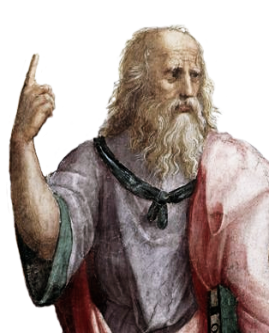
Plato
Dialogues that teach thinking; reason, myth, and civic life explored in living talk.