Father Sergius
Father Sergius is a novella written by Leo Tolstoy and published posthumously in 1911.
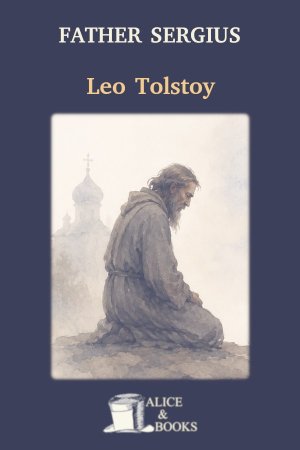
The story follows a proud young aristocrat who abandons his worldly life after discovering that his fiancée had previously been the mistress of the emperor. Seeking spiritual purity, he enters a monastery and eventually becomes a respected hermit known for his religious devotion.
Despite his reputation for holiness, he continues to struggle with pride, temptation, and his desire for admiration. His repeated attempts to overcome these weaknesses lead him through moments of extreme self-denial, moral failure, and a growing realization that his spiritual life has been shaped as much by vanity as by genuine faith.
Through his journey, Tolstoy explores the conflict between outward holiness and true humility, suggesting that genuine goodness is found not in fame or religious prestige, but in simple acts of service and compassion.
"In Petersburg in the eighteen-forties a surprising event occurred. An officer of the Cuirassier Life Guards, a handsome prince who everyone predicted would become aide-de-camp to the Emperor Nicholas I and have a brilliant career, left the service, broke off his engagement to a beautiful maid of honour, a favourite of the Empress`s, gave his small estate to his sister, and retired to a monastery to become a monk."
This English translation was made by Louise and Aylmer Maude, two of Tolstoy's best-known translators.
Your download has started
PDF · Father Sergius — didn't start? Download again
Also available: PDF · EPUB · Read online
Read it on a Kindle
Download the EPUB and send it with Amazon's Send to Kindle (web, app, or your kindle.com email). Modern Kindles accept EPUB directly — no conversion needed.
On iPhone or iPad
Tap the downloaded file, then "Open in Books". It opens in Apple Books, with your reading progress synced across your devices.
On Android
Open the file with Google Play Books or any EPUB reader (ReadEra, Moon+ Reader). PDFs open in any viewer.
On your computer
PDFs open anywhere. For EPUB, try Calibre or Thorium Reader — both free and excellent.
Public domain (US)·No sign-up·DRM-free·Real text, not scans
Copyright note. Father Sergius by Leo Tolstoy is believed to be in the public domain in the United States only. It may still be copyrighted in other countries. If you are not in the United States, please check your local laws to ensure this eBook is in the public domain in your country before downloading Father Sergius in PDF or EPUB.
- Reading time
- 1 hour 29 minutes
- Pace
- intermediate
- First published
- 1911
- Language
- Russian
Share this book
About the author

Leo Tolstoy
Epic realism with intimate ethics; the cadence of daily life turned into vision and care.