Ramayana
The Ramayana is a Sanskrit epic from ancient India attributed to Valmiki and composed over a long period, its core usually dated between the 7th and 4th centuries BC, with later material added afterwards.
The "Ramayana" is an ancient Indian epic attributed to the sage Valmiki. It is one of the two major Sanskrit epics of ancient India. The narrative of the Ramayana focuses on the life of Rama, prince of Ayodhya and seventh avatar of the Hindu god Vishnu.
The epic is divided into seven books, or Kandas, and consists of some 24,000 verses. The main storyline is as follows:
- Bala Kanda: This book begins with the sage Valmiki's question to Narada about a perfect human being who embodies all virtues. Narada describes Rama, a prince of Ayodhya. The story moves on to the birth of Rama and his siblings, their education and Rama's marriage to Sita after bending the mighty bow of Shiva.
- Ayodhya Kanda: Rama is about to be crowned king of Ayodhya, but his stepmother Kaikeyi, influenced by her maid Manthara, demands that her own son Bharata be made king and that Rama be exiled for 14 years. Rama accepts exile, and Sita and his devoted brother Lakshmana join him.
- Aranya Kanda: In the forest, Rama, Sita and Lakshmana meet several sages and have many adventures, including the humiliation of the demoness Surpanakha, whose complaint to her brother leads to Sita's abduction by Ravana, the demon king of Lanka.
- Kishkindha Kanda: Rama and Lakshmana meet Hanuman and form an alliance with the monkey king Sugriva. In exchange for Rama's help in regaining his own kingdom, Sugriva agrees to help find Sita.
- Sundara Kanda: This book details Hanuman's journey to Lanka, where he finds Sita imprisoned. Hanuman reassures her, burns Lanka and returns to Rama with the news of Sita's location.
- Yuddha Kanda: This extensive book describes the battle between the armies of Rama and Ravana. With the help of his allies, including the monkey god Hanuman, Rama finally defeats Ravana and rescues Sita. However, Rama doubts Sita's chastity and subjects her to a trial by fire to prove her purity.
- Uttara Kanda: This last book deals with Rama's life after his return to Ayodhya, the birth of his sons Lava and Kusha, Sita's banishment due to social pressure and finally Rama's reunion with his sons and Sita. The epic concludes with Rama's departure from earth and his ascension to Vaikuntha, the abode of Lord Vishnu.
"Ramayana" explores themes such as duty, righteousness, and loyalty: the ideal ruler, the ideal wife, the ideal brother and the ideal servant. It has had a profound impact on Indian life and culture and remains a revered text in Hinduism and Indian culture.
"Now Daśaratha's pious mind
Meet wedlock for his sons designed;
With priests and friends the king began
To counsel and prepare his plan.
Such thoughts engaged his bosom, when,
To see Ayodhyá's lord of men,
A mighty saint of glorious fame,
The hermit Viśvámitra came."
This edition of Ramayana is based on Ralph T. H. Griffith's translation.
Your download has started
PDF · Ramayana — didn't start? Download again
Also available: PDF · EPUB · Read online
Read it on a Kindle
Download the EPUB and send it with Amazon's Send to Kindle (web, app, or your kindle.com email). Modern Kindles accept EPUB directly — no conversion needed.
On iPhone or iPad
Tap the downloaded file, then "Open in Books". It opens in Apple Books, with your reading progress synced across your devices.
On Android
Open the file with Google Play Books or any EPUB reader (ReadEra, Moon+ Reader). PDFs open in any viewer.
On your computer
PDFs open anywhere. For EPUB, try Calibre or Thorium Reader — both free and excellent.
Public domain (US)·No sign-up·DRM-free·Real text, not scans
Copyright note. Ramayana by Valmiki is believed to be in the public domain in the United States only. It may still be copyrighted in other countries. If you are not in the United States, please check your local laws to ensure this eBook is in the public domain in your country before downloading Ramayana in PDF or EPUB.
- Pages
- 1904
- Reading time
- 35 hours 22 minutes
- Pace
- Intermediate
- First published
- 8
- Language
- Sanskrit
- Downloads
- 4,811
2018 years later, still timely
Why Read Ramayana in 2026?
A foundational epic of duty, exile, loyalty, and return—told with sweeping action and intimate feeling. Its archetypes still shape stories worldwide.
Today's connection
Read it for reflections on leadership, promise-keeping, and the costs of righteousness. The journey frame makes complex ethics graspable for modern readers and classrooms.
Guidance and duty
Choices weighed against larger bonds.
Family and society
Roles tested by distance and time.
Epic road
Trials that reveal character and purpose.
Share this book
About the author
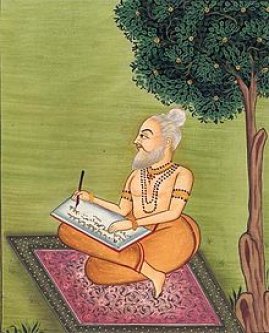
Valmiki
Epic of devotion, duty, and exile; a family saga that shapes culture and conduct.