The Landlady
The Landlady is a novella written by Fyodor Dostoevsky and first published in 1847. It is one of the Russian writer's first novels, prior to his time in Siberia.
This short story follows the complex relationship between Ordynov, a young student, and Katerina Ivanovna, his enigmatic landlady. The young man finds himself caught between reality and illusion, while his panic grows as he discovers the mysterious past of the woman who completely dominates his thoughts.
The story deals with themes of love and madness. Although it is not as well known as his later novels, it is very interesting to understand Dostoevsky's development as a writer. The book presents a dense and oppressive atmosphere so characteristic of his later work, as well as highlighting the complexity of human relationships.
Through this journey into the depths of Ordynov's mind, we can see the Russian writer's ability, from a very young age, to portray moral dilemmas, human passions, and their impact on life.
"Ordynov had made up his mind at last to change his lodgings. The landlady with whom he lodged, the poor and elderly widow of a petty functionary, was leaving Petersburg, for some reason or other, and setting off to a remote province to live with relations, before the first of the month when his time at the lodging was up."
This edition of the book The Landlady is based on the translation by Constance Garnett.
Your download has started
PDF · The Landlady — didn't start? Download again
Also available: PDF · EPUB · Read online
Read it on a Kindle
Download the EPUB and send it with Amazon's Send to Kindle (web, app, or your kindle.com email). Modern Kindles accept EPUB directly — no conversion needed.
On iPhone or iPad
Tap the downloaded file, then "Open in Books". It opens in Apple Books, with your reading progress synced across your devices.
On Android
Open the file with Google Play Books or any EPUB reader (ReadEra, Moon+ Reader). PDFs open in any viewer.
On your computer
PDFs open anywhere. For EPUB, try Calibre or Thorium Reader — both free and excellent.
Public domain (US)·No sign-up·DRM-free·Real text, not scans
Copyright note. The Landlady by Fyodor Dostoevsky is believed to be in the public domain in the United States only. It may still be copyrighted in other countries. If you are not in the United States, please check your local laws to ensure this eBook is in the public domain in your country before downloading The Landlady in PDF or EPUB.
- Pages
- 79
- Reading time
- 2 hours 37 minutes
- Pace
- Intermediate
- First published
- 1847
- Language
- Russian
- Downloads
- 2,506
179 years later, still timely
Why Read The Landlady in 2026?
Dostoevsky sketches obsession in a cramped room: power masked as care, romance as control, self as mirage. Uneasy and hypnotic, this early work sharpens your radar for red flags and stories we tell to feel chosen.
Today's connection
When parasocial bonds and precarious housing blur boundaries, the novella reads like a caution: attention can be a trap, devotion a disguise.
Watch the story
Who benefits from belief?
Control currents
Charm that cages.
Uncanny rooms
Lonely minds grow shadows.
Share this book
About the author
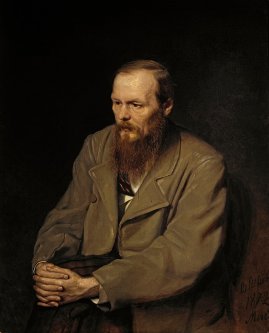
Fyodor Dostoevsky
Psychological depth and moral crisis under pressure; fiction that tests conscience, freedom, and society.