Beyond Good and Evil
Beyond Good and Evil is a philosophical essay written by Friedrich Nietzsche and published in 1886. It is one of the key texts for understanding 19th century philosophy.
Nietzsche exposes in this book his rejection of the moral emptiness of contemporary thinkers, accusing them of lacking any critical sense and of accepting Judeo-Christian morality without opposition or analysis.
The book deals with all the main points of Nietzsche's philosophical maturity and develops in a more concrete way previous ideas that he had launched in works such as Thus Spake Zarathustra.
The author himself paid the cost of publishing and producing the book. However, it did not have much success or attention at the time of its release, instead it has been gaining popularity over time.
"1. The Will to Truth, which is to tempt us to many a hazardous enterprise, the famous Truthfulness of which all philosophers have hitherto spoken with respect, what questions has this Will to Truth not laid before us! What strange, perplexing, questionable questions! It is already a long story; yet it seems as if it were hardly commenced".
Your download has started
PDF · Beyond Good and Evil — didn't start? Download again
Also available: PDF · EPUB · MOBI · Read online
Read it on a Kindle
Download the EPUB and send it with Amazon's Send to Kindle (web, app, or your kindle.com email). Modern Kindles accept EPUB directly — no conversion needed.
On iPhone or iPad
Tap the downloaded file, then "Open in Books". It opens in Apple Books, with your reading progress synced across your devices.
On Android
Open the file with Google Play Books or any EPUB reader (ReadEra, Moon+ Reader). PDFs open in any viewer.
On your computer
PDFs open anywhere. For EPUB, try Calibre or Thorium Reader — both free and excellent.
Public domain (US)·No sign-up·DRM-free·Real text, not scans
Copyright note. Beyond Good and Evil by Friedrich Nietzsche is believed to be in the public domain in the United States only. It may still be copyrighted in other countries. If you are not in the United States, please check your local laws to ensure this eBook is in the public domain in your country before downloading Beyond Good and Evil in PDF or EPUB.
- Pages
- 174
- Reading time
- 5 hours 17 minutes
- Pace
- Intermediate
- First published
- 1886
- Language
- German
- Downloads
- 7,775
140 years later, still timely
Why Read Beyond Good and Evil in 2026?
Nietzsche swaps conclusions for provocations and asks you to supply the proof. "Beyond Good and Evil" is a book of sharp, portable paragraphs that question where our values come from and how language smuggles morals as facts. It is not a catechism; it’s a gym for judgment and a primer in intellectual courage.
Today's connection
Frameworks abound; few survive hard questions. Read this as method: examine premises, watch metaphors, and trace incentives behind ideals. Take notes, argue back, return later—active reading is the point. You leave allergic to lazy certainty and better at thinking in public.
Aphorism as method
Short forms let many tests run at once. Each line asks for your part of the proof.
Values under inspection
Morality is treated as a history of choices, not a given. The critique aims at clarity, not nihilism.
Reader as co-author
Margin notes are half the book. Disagreement is a feature, not a failure.
Share this book
About the author
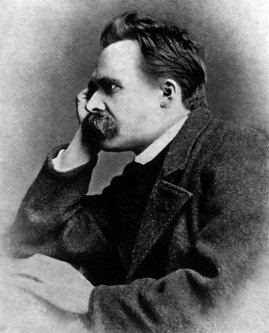
Friedrich Nietzsche
Provocative philosophy that asks what values mean once inherited certainties collapse.