Human, all too human
Human, all too human is a Philosophy work written by Friedrich Nietzsche and first published in 1908.
It is a collection of essays on topics as diverse as epistemology, religion, art, and morality. It reflects many of Nietzsche's ideas and his devastating critique of Western thought and culture, which he would develop in later works.
The philosopher analyzes the meaning behind every human interaction and puts humanity itself on trial. He also criticizes the contradictions of Christianity.
Although it is not as well known as other works, it is one of the most accessible readings of Nietzsche and ideal for an introduction to the German philosopher's thought. It is later than the first phase influenced by Schopenhauer's ideas, but before one of his greatest works: Thus Spake Zarathustra.
"It is often enough, and always with great surprise, intimated to me that there is something both ordinary and unusual in all my writings, from the "Birth of Tragedy" to the recently published "Prelude to a Philosophy of the Future": they all contain, I have been told, snares and nets for short sighted birds, and something that is almost a constant, subtle, incitement to an overturning of habitual opinions and of approved customs. What!? Everything is merely—human—all too human?"
This edition of Human, all too human is based on Alexander Harvey's translation.
Your download has started
PDF · Human, all too human — didn't start? Download again
Also available: PDF · EPUB · MOBI · Read online
Read it on a Kindle
Download the EPUB and send it with Amazon's Send to Kindle (web, app, or your kindle.com email). Modern Kindles accept EPUB directly — no conversion needed.
On iPhone or iPad
Tap the downloaded file, then "Open in Books". It opens in Apple Books, with your reading progress synced across your devices.
On Android
Open the file with Google Play Books or any EPUB reader (ReadEra, Moon+ Reader). PDFs open in any viewer.
On your computer
PDFs open anywhere. For EPUB, try Calibre or Thorium Reader — both free and excellent.
Public domain (US)·No sign-up·DRM-free·Real text, not scans
Copyright note. Human, all too human by Friedrich Nietzsche is believed to be in the public domain in the United States only. It may still be copyrighted in other countries. If you are not in the United States, please check your local laws to ensure this eBook is in the public domain in your country before downloading Human, all too human in PDF or EPUB.
- Pages
- 140
- Reading time
- 3 hours 18 minutes
- Pace
- Intermediate
- First published
- 1908
- Language
- German
- Downloads
- 2,884
118 years later, still timely
Why Read Human, All Too Human in 2026?
Aphorisms that strip varnish from habits and idols. Portable skepticism for readers who like ideas in sharp, testable pieces.
Today's connection
Take it as a thinking companion. The book prods motive, custom, and taste, encouraging curiosity over reverence. Read a few lines; carry them around; see what survives contact with life.
Aphorism form
Brief, provocative, and portable.
Psychology first
Explanations before exhortations.
De-mystifying push
Assumptions questioned without ceremony.
Share this book
About the author
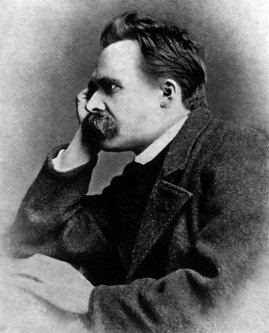
Friedrich Nietzsche
Provocative philosophy that asks what values mean once inherited certainties collapse.