Mayan Nomenclature
Mayan Nomenclature is a linguistic article about the nomenclature of the Mayan language published in The University press, Cambridge, 1906.
Charles Pickering Bowditch comments on aspects such as the type of numbering used in the Mayan language, very different from the decimal system currently used. He places special emphasis on the system for numbering time: hours and days.
It establishes some theories such as that the period of 20 times 360 days was called katun and not ahau, that each of the parts that make up a katun were called tun and that in the books of Chilan Balam there is no reference to any other period of time called ahaukatun.
And this system is, as far as we know, used for nothing else but for reckoning days. The only difference between the first system and the second is that in the first system twenty of the second term equal one of the third, while in the second system eighteen of the second equal one of the third.
Your download has started
PDF · Mayan Nomenclature — didn't start? Download again
Also available: PDF · EPUB · MOBI · Read online
Read it on a Kindle
Download the EPUB and send it with Amazon's Send to Kindle (web, app, or your kindle.com email). Modern Kindles accept EPUB directly — no conversion needed.
On iPhone or iPad
Tap the downloaded file, then "Open in Books". It opens in Apple Books, with your reading progress synced across your devices.
On Android
Open the file with Google Play Books or any EPUB reader (ReadEra, Moon+ Reader). PDFs open in any viewer.
On your computer
PDFs open anywhere. For EPUB, try Calibre or Thorium Reader — both free and excellent.
Public domain (US)·No sign-up·DRM-free·Real text, not scans
Copyright note. Mayan Nomenclature by Charles Pickering Bowditch is believed to be in the public domain in the United States only. It may still be copyrighted in other countries. If you are not in the United States, please check your local laws to ensure this eBook is in the public domain in your country before downloading Mayan Nomenclature in PDF or EPUB.
- Pages
- 13
- Reading time
- 20 minutes
- Pace
- Slow
- First published
- 1906
- Language
- English
120 years later, still timely
Why Read Mayan Nomenclature in 2026?
A concise, early attempt to parse Maya names and glyphs—technical, careful, foundational.
Today's connection
A window into the history of Mesoamerican studies and a reminder to approach living cultures with rigor and respect.
Primary scholarship
See methods at work.
Cultural context
Place, people, language.
Research ethics
Respect before conclusions.
Share this book
About the author
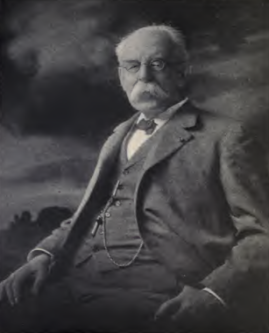
Charles Pickering Bowditch
Maya studies and patient scholarship; finance turned to fieldwork and decipherment.