
Narrative of the Life of Frederick Douglass, an American Slave
Narrative of the Life of Frederick Douglass, an American Slave is a memoir written by former slave Frederick Douglass during his stay in Lynn, Massachusetts and published in 1845. It is the best-known work published by former slaves at that time and it is considered one of the most influential literary pieces to drive the abolitionist movement.
This book is a treatise on abolition and tells of Frederick Douglass's life as a slave and how he wishes to become a free man. It is introduced by two white abolitionists: a preface by William Lloyd Garrison and a letter by Wendell Phillips, where the veracity of the story and the literacy of its author are corroborated.
Frederick Douglass shows us the suffering of a man born a slave and his path to liberation. We are, therefore, before a story of self-improvement and hope. A must-read for understanding American history, this book is one of the most moving memoirs ever written.
Your download has started
PDF · Narrative of the Life of Frederick Douglass, an American Slave — didn't start? Download again
Also available: PDF · EPUB · MOBI · Read online
Read it on a Kindle
Download the EPUB and send it with Amazon's Send to Kindle (web, app, or your kindle.com email). Modern Kindles accept EPUB directly — no conversion needed.
On iPhone or iPad
Tap the downloaded file, then "Open in Books". It opens in Apple Books, with your reading progress synced across your devices.
On Android
Open the file with Google Play Books or any EPUB reader (ReadEra, Moon+ Reader). PDFs open in any viewer.
On your computer
PDFs open anywhere. For EPUB, try Calibre or Thorium Reader — both free and excellent.
Public domain (US)·No sign-up·DRM-free·Real text, not scans
Copyright note. Narrative of the Life of Frederick Douglass, an American Slave by Frederick Douglass is believed to be in the public domain in the United States only. It may still be copyrighted in other countries. If you are not in the United States, please check your local laws to ensure this eBook is in the public domain in your country before downloading Narrative of the Life of Frederick Douglass, an American Slave in PDF or EPUB.
- Pages
- 115
- Reading time
- 3 hours 26 minutes
- Pace
- Intermediate
- First published
- 1845
- Language
- English
- Downloads
- 2,034
181 years later, still timely
Why Read Narrative of the Life of Frederick Douglass in 2026?
Clear, fearless, and exacting: Douglass turns lived experience into moral argument. Every page builds understanding—and urgency.
Today's connection
A primary source that anchors debates on freedom, education, and citizenship. It models rhetoric as action and shows how reading, writing, and solidarity undo captivity.
Moral clarity
Principles sharpened by risk.
Literacy as power
Words that unmake chains.
Courage in practice
Choice by choice, a life reclaimed.
Share this book
About the author
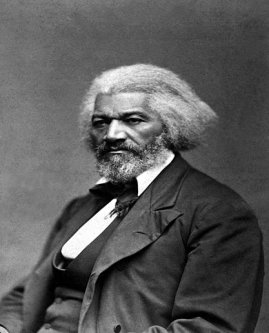
Frederick Douglass
Autobiography and speeches that make freedom, law, and dignity vivid and exact.
If this one stays with you…

The NegroW. E. B. Du Bois

Impressions of AmericaOscar Wilde
The Twelve CaesarsSuetonius
A Journal of the Plague YearDaniel Defoe
From Narrative of the Life of Frederick Douglass, an American Slave
Never having enjoyed, to any considerable extent, her soothing presence, her tender and watchful care, I received the tidings of [my mother’s] death with much the same emotions I should have probably felt at the death of a stranger.
Slaves sing most when they are most unhappy. The songs of the slave represent the sorrows of his heart; and he is relieved by them, only as an aching heart is relieved by its tears.
Thus is slavery the enemy of both the slave and the slaveholder.
For of all slaveholders with whom I have ever met, religious slaveholders are the worst. I have ever found them the meanest and basest, the most cruel and cowardly, of all others.
I remember the first time I ever witnessed this horrible exhibition. I was quite a child, but I well remember it. I never shall forget it whilst I remember any thing. It was the first of a long series of such outrages, of which I was doomed to be a witness and a participant. It struck me with awful force. It was the blood-stained gate, the entrance to the hell of slavery, through which I was about to pass. It was a most terrible spectacle. I wish I could commit to paper the feelings with which I beheld it.