On the Genealogy of Morals
On the Genealogy of Morals is a work written by Friedrich Nietzsche and first published in 1887. The work attempts to clarify and complement some of the themes discussed in his earlier work entitled Beyond Good and Evil.
Although his motivation was to complement earlier writings, On the Genealogy of Morals develops much further the ideas of "good" and "evil" and the concepts of guilt and bad conscience. It also reflects on ascetic ideals and the purpose of any philosopher. He also uses language that is less cryptic and easier to understand, making it a much more accessible read.
Nietzsche contrasts 'good and bad' with 'good and evil', and traces how the first pair was overturned by the second under Judeo-Christian interpretation. He then analyzes the bad conscience, whose cause in primitive times was guilt, understood not in the sense of moral responsibility, but as equivalent to material debt.
This edition of the book On the Genealogy of Morals is based on the translation by Horace B. Samuel, M.A. The fragment "Peoples and Countries" is given in J. M. Kennedy's translation.
"Those English psychologists, who up to the present are the only philosophers who are to be thanked for any endeavour to get as far as a history of the origin of morality-these men, I say, offer us in their own personalities no paltry problem;-they even have, if I am to be quite frank about it, in their capacity of living riddles, an advantage over their books..."
Your download has started
PDF · On the Genealogy of Morals — didn't start? Download again
Also available: PDF · EPUB · MOBI · Read online
Read it on a Kindle
Download the EPUB and send it with Amazon's Send to Kindle (web, app, or your kindle.com email). Modern Kindles accept EPUB directly — no conversion needed.
On iPhone or iPad
Tap the downloaded file, then "Open in Books". It opens in Apple Books, with your reading progress synced across your devices.
On Android
Open the file with Google Play Books or any EPUB reader (ReadEra, Moon+ Reader). PDFs open in any viewer.
On your computer
PDFs open anywhere. For EPUB, try Calibre or Thorium Reader — both free and excellent.
Public domain (US)·No sign-up·DRM-free·Real text, not scans
Copyright note. On the Genealogy of Morals by Friedrich Nietzsche is believed to be in the public domain in the United States only. It may still be copyrighted in other countries. If you are not in the United States, please check your local laws to ensure this eBook is in the public domain in your country before downloading On the Genealogy of Morals in PDF or EPUB.
- Pages
- 146
- Reading time
- 4 hours 40 minutes
- Pace
- Intermediate
- First published
- 1887
- Language
- German
- Downloads
- 3,359
139 years later, still timely
Why Read On the Genealogy of Morals in 2026?
Three essays that examine where our moral words come from—noble, good, guilt—and how resentment shapes them. It stresses inquiry over piety and invites readers to test their motives.
Today's connection
Best read slowly with notes. It sharpens conversations about punishment, conscience, and public virtue, and pairs well with history, psychology, or media studies.
Origins of values
Words carry history and power.
Guilt and punishment
Why we moralize and how.
Method, not mantra
Question first, then commit.
Share this book
About the author
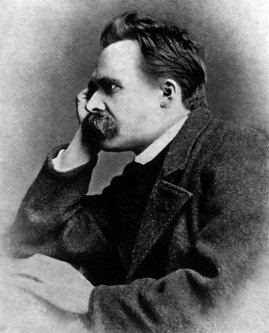
Friedrich Nietzsche
Provocative philosophy that asks what values mean once inherited certainties collapse.