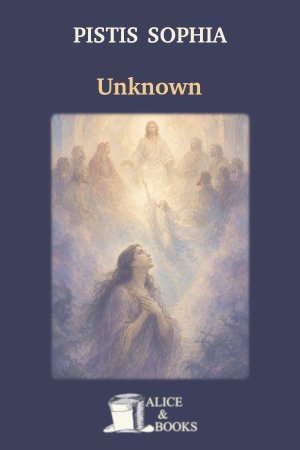
Pistis Sophia
Pistis Sophia is an ancient Gnostic Christian text by an unknown author, probably composed between the third and fourth centuries and preserved in a Coptic manuscript.
The work presents the risen Jesus teaching his disciples about the hidden mysteries of the spiritual universe. Mary Magdalene plays a prominent role in the dialogues, asking questions and interpreting many of the teachings.
At the center of the text is the fall of Pistis Sophia from the higher realms and her long series of prayers and repentances. Her struggle against hostile powers and her eventual deliverance explore the soul’s fall, repentance, spiritual purification, and redemption.
"But it happened after that Jesus rose out of those who (are) dead, and he spent eleven years speaking with his disciples, and teaching them only as far as the Places of the First precept (Law?), and as far as the Places of the First Mystery, this which (is) the inward of the veil which (is) within the First precept, namely the twenty-fourth mystery out(side) and below..."
This edition is based on George Horner’s English translation from the Coptic, with an introduction by Francis Legge, originally published by the Society for Promoting Christian Knowledge in 1924.
Your download has started
PDF · Pistis Sophia — didn't start? Download again
Also available: PDF · EPUB · Read online
Read it on a Kindle
Download the EPUB and send it with Amazon's Send to Kindle (web, app, or your kindle.com email). Modern Kindles accept EPUB directly — no conversion needed.
On iPhone or iPad
Tap the downloaded file, then "Open in Books". It opens in Apple Books, with your reading progress synced across your devices.
On Android
Open the file with Google Play Books or any EPUB reader (ReadEra, Moon+ Reader). PDFs open in any viewer.
On your computer
PDFs open anywhere. For EPUB, try Calibre or Thorium Reader — both free and excellent.
Public domain (US)·No sign-up·DRM-free·Real text, not scans
Copyright note. Pistis Sophia by Unknown is believed to be in the public domain in the United States only. It may still be copyrighted in other countries. If you are not in the United States, please check your local laws to ensure this eBook is in the public domain in your country before downloading Pistis Sophia in PDF or EPUB.
- Pages
- 271
- Reading time
- 10 hours 11 minutes
- Pace
- slow
- First published
- 1773
- Language
- Coptic (with Greek s
253 years later, still timely
Why Read Pistis Sophia in 2026?
An ancient Gnostic dialogue in which the risen Jesus unveils a hidden cosmos to his disciples, with Mary Magdalene pressing question after question and interpreting the teachings. At its center is Sophia's fall from the higher realms and her long climb back through prayer and repentance.
Today's connection
For readers drawn to esoteric traditions and voices outside the familiar canon, it shows early communities arguing over authority, secrecy, and who gets to interpret the divine.
Hidden cosmos
Realms, emanations, mysteries.
Fall and return
Repentance as a journey.
Dialogue form
Questions drive the teaching.
Share this book
About the author

Unknown
Anonymous voices that carry myth, prayer, and technique across centuries without preserved names.