Second Treatise of Government
Second Treatise of Government is a treatise on political philosophy written by John Locke and published anonymously in 1690, a year after the first treatise. In this second treatise, an introduction to Locke's theory of political or civil society based on natural rights and the social contract is made.
Locke develops his theory of the State and how to organize and deal with it in order to establish the best possible form of power. He attempts to dismiss the idea of tyrannicide and states that a constitutional king is valid as long as he is subservient to the power of Parliament.
Knowing that one of the main problems of political systems is corruption, Locke proposes dividing power into three parts:
- A Legislative Power, the main power and elected and appointed by the people.
- An Executive Power, elected by the Legislative Power.
- A Federative Power, in charge of foreign relations.
"Sect. 1. It having been shewn in the foregoing discourse,
(1). That Adam had not, either by natural right of fatherhood, or by positive donation from God, any such authority over his children, or dominion over the world, as is pretended..."
Your download has started
PDF · Second Treatise of Government — didn't start? Download again
Also available: PDF · EPUB · MOBI · Read online
Read it on a Kindle
Download the EPUB and send it with Amazon's Send to Kindle (web, app, or your kindle.com email). Modern Kindles accept EPUB directly — no conversion needed.
On iPhone or iPad
Tap the downloaded file, then "Open in Books". It opens in Apple Books, with your reading progress synced across your devices.
On Android
Open the file with Google Play Books or any EPUB reader (ReadEra, Moon+ Reader). PDFs open in any viewer.
On your computer
PDFs open anywhere. For EPUB, try Calibre or Thorium Reader — both free and excellent.
Public domain (US)·No sign-up·DRM-free·Real text, not scans
Copyright note. Second Treatise of Government by John Locke is believed to be in the public domain in the United States only. It may still be copyrighted in other countries. If you are not in the United States, please check your local laws to ensure this eBook is in the public domain in your country before downloading Second Treatise of Government in PDF or EPUB.
- Pages
- 153
- Reading time
- 4 hours 51 minutes
- Pace
- Slow
- First published
- 1689
- Language
- English
- Downloads
- 2,055
337 years later, still timely
Why Read Second Treatise of Government in 2026?
Consent of the governed, rights, and the limits of power—straight from a source text that still underwrites arguments today.
Today's connection
Useful as a primary document when elections, platforms, and protests compete for definitions. Read the clauses people quote—then the ones they skip.
Rights & consent
Government by agreement, not gift.
Source reading
Don’t rely on summaries.
Civil society
Property, trust, and resistance.
Share this book
About the author
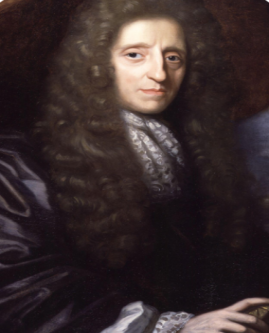
John Locke
Modern ideas on rights, consent, toleration, and knowledge in plain vigorous prose.