The Birth of Tragedy
The Birth of Tragedy; or, Hellenism and Pessimism is a work of philosophy and classical philology by Friedrich Nietzsche, first published in 1872. It is the German philosopher's first book, published when he was 27 years old.
Nietzsche, an enthusiast of Greek tragedy, develops an account of Greek tragedy and the role of art in confronting suffering. He draws on Schopenhauer’s philosophy and Wagner’s music and considers the tragic theater of Ancient Greece to be the highest art form.
He contrasts the Apollonian impulse toward form, image, and individuation with the Dionysian impulse toward ecstasy and the dissolution of boundaries. Nietzsche argues that the interaction of these forces made Attic tragedy possible.
Although its claims were controversial, the book introduced ideas Nietzsche would revisit and criticize in his later work.
"Whatever may lie at the bottom of this doubtful book must be a question of the first rank and attractiveness, moreover a deeply personal question,—in proof thereof observe the time in which it originated, in spite of which it originated, the exciting period of the Franco-German war of 1870-71."
Your download has started
PDF · The Birth of Tragedy — didn't start? Download again
Also available: PDF · EPUB · MOBI · Read online
Read it on a Kindle
Download the EPUB and send it with Amazon's Send to Kindle (web, app, or your kindle.com email). Modern Kindles accept EPUB directly — no conversion needed.
On iPhone or iPad
Tap the downloaded file, then "Open in Books". It opens in Apple Books, with your reading progress synced across your devices.
On Android
Open the file with Google Play Books or any EPUB reader (ReadEra, Moon+ Reader). PDFs open in any viewer.
On your computer
PDFs open anywhere. For EPUB, try Calibre or Thorium Reader — both free and excellent.
Public domain (US)·No sign-up·DRM-free·Real text, not scans
Copyright note. The Birth of Tragedy by Friedrich Nietzsche is believed to be in the public domain in the United States only. It may still be copyrighted in other countries. If you are not in the United States, please check your local laws to ensure this eBook is in the public domain in your country before downloading The Birth of Tragedy in PDF or EPUB.
- Pages
- 142
- Reading time
- 4 hours 37 minutes
- Pace
- Intermediate
- First published
- 1872
- Language
- German
- Downloads
- 3,953
154 years later, still timely
Why Read The Birth of Tragedy in 2026?
Nietzsche’s bold theory of art—order meets ecstasy, Apollo meets Dionysus. A provocative lens for theater, music, and why beauty often hurts and still explains us.
Today's connection
It’s an energetic argument about why we need both clarity and rapture. Read it with performances in mind; the ideas sharpen how you watch and listen.
Stage as laboratory
Drama tests what a culture believes.
Rhythm and rapture
Feeling is not the enemy of form.
Useful paradox
Truth arrives in tension, not slogans.
Share this book
About the author
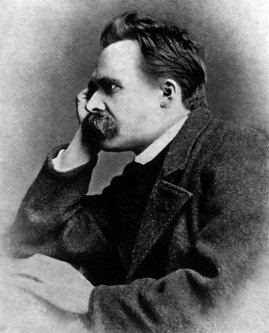
Friedrich Nietzsche
Provocative philosophy that asks what values mean once inherited certainties collapse.