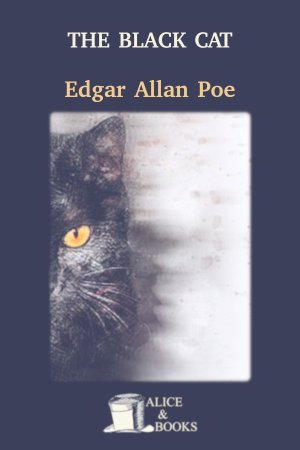
The Black Cat
The Black Cat is a short story by Edgar Allan Poe first published in 1843 in the Philadelphia Saturday Evening Post.
The story tells, in first person, the narrator's descent into madness and self-destruction.
He lives with his wife and they have several animals, including a black cat named Pluto. The narrator has always been an animal lover and has a very good relationship with the cat. Pluto follows him around the house, the narrator is the only one who feeds him, and the bond between them is very strong.
However, the narrator becomes an alcoholic and the friendship between them is broken one night when he, totally drunk, becomes obsessed with the cat avoiding him. He tries to catch it, the frightened animal bites his hand, and in a fit of rage he cuts out one of its eyes with a penknife...
Subsequently he feels guilty and ashamed of his act, and the fact of seeing the poor animal without the eye reminds him all the time of the atrocious deed he has committed, which leads him more and more to madness and to commit worse acts...
"For the most wild, yet most homely narrative which I am about to pen, I neither expect nor solicit belief. Mad indeed would I be to expect it in a case where my very senses reject their own evidence".
Your download has started
PDF · The Black Cat — didn't start? Download again
Also available: PDF · EPUB · MOBI · Read online
Read it on a Kindle
Download the EPUB and send it with Amazon's Send to Kindle (web, app, or your kindle.com email). Modern Kindles accept EPUB directly — no conversion needed.
On iPhone or iPad
Tap the downloaded file, then "Open in Books". It opens in Apple Books, with your reading progress synced across your devices.
On Android
Open the file with Google Play Books or any EPUB reader (ReadEra, Moon+ Reader). PDFs open in any viewer.
On your computer
PDFs open anywhere. For EPUB, try Calibre or Thorium Reader — both free and excellent.
Public domain (US)·No sign-up·DRM-free·Real text, not scans
Copyright note. The Black Cat by Edgar Allan Poe is believed to be in the public domain in the United States only. It may still be copyrighted in other countries. If you are not in the United States, please check your local laws to ensure this eBook is in the public domain in your country before downloading The Black Cat in PDF or EPUB.
- Pages
- 14
- Reading time
- 20 minutes
- Pace
- Intermediate
- First published
- 1843
- Language
- English
- Downloads
- 3,383
183 years later, still timely
Why Read The Black Cat in 2026?
A confession unravels as violence hides beneath reason. Poe maps guilt with unnerving calm, turning a household into a courtroom of the mind. A masterclass in how denial becomes horror.
Today's connection
Domestic harm, self deception, and unreliable narration are not modern inventions. This story demonstrates how rationalizations collapse under their own weight.
Night within
Conscience darkens the room.
Unreliable witness
Reason argues, truth leaks.
Judgment day
Evidence the self supplies.
Share this book
About the author

Edgar Allan Poe
Precision of mood and method that invents detective logic and the claustrophobia of obsession.