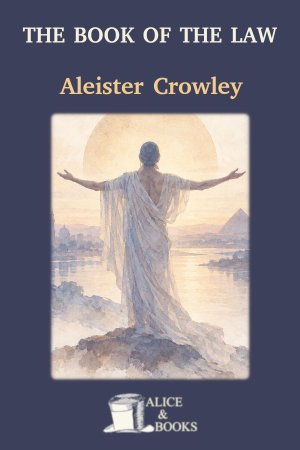
The Book of the Law
The Book of the Law is a religious and philosophical text written by British occultist Aleister Crowley in 1904. Also known as Liber AL vel Legis, it became the central sacred text of Thelema, the spiritual and philosophical system developed by Crowley.
Crowley claimed that the book was dictated to him in Cairo over three consecutive days by a supernatural intelligence called Aiwass. Its three chapters present a new spiritual age governed by individual will, expressed through the famous principle: “Do what thou wilt shall be the whole of the Law.”
The work explores ideas of personal freedom, destiny, spiritual transformation, and the discovery of one's True Will. Its language is highly symbolic and combines elements of mysticism, occultism, prophecy, and poetry, often leaving passages deliberately open to interpretation.
The Book of the Law became the foundation of Crowley's later teachings and had a lasting influence on modern occultism and Western esoteric traditions. It remains one of his most widely discussed and controversial works.
"1. Had! The manifestation of Nuit.
2. The unveiling of the company of heaven.
3. Every man and every woman is a star.
4. Every number is infinite; there is no difference."
Your download has started
PDF · The Book of the Law — didn't start? Download again
Also available: PDF · EPUB · Read online
Read it on a Kindle
Download the EPUB and send it with Amazon's Send to Kindle (web, app, or your kindle.com email). Modern Kindles accept EPUB directly — no conversion needed.
On iPhone or iPad
Tap the downloaded file, then "Open in Books". It opens in Apple Books, with your reading progress synced across your devices.
On Android
Open the file with Google Play Books or any EPUB reader (ReadEra, Moon+ Reader). PDFs open in any viewer.
On your computer
PDFs open anywhere. For EPUB, try Calibre or Thorium Reader — both free and excellent.
Public domain (US)·No sign-up·DRM-free·Real text, not scans
Copyright note. The Book of the Law by Aleister Crowley is believed to be in the public domain in the United States only. It may still be copyrighted in other countries. If you are not in the United States, please check your local laws to ensure this eBook is in the public domain in your country before downloading The Book of the Law in PDF or EPUB.
- Reading time
- 31 minutes
- Pace
- intermediate
- First published
- 1909
- Language
- English
117 years later, still timely
Why Read The Book of the Law Today?
Crowley's foundational Thelemic text speaks through prophetic voices and dense symbols. Its declarations about will and spiritual authority are forceful, strange, and often resistant to a single settled reading.
Today's connection
A short primary text for exploring modern esotericism. Distinguish its claimed revelation from historical description, and examine how commanding language establishes its own authority.
Prophetic voices
The speaking presence shifts by chapter.
Will and interpretation
A central idea invites competing readings.
Symbolic intensity
Images resist a purely literal account.
Share this book
About the author
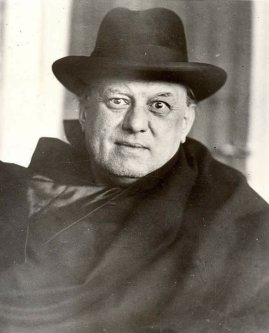
Aleister Crowley
Prophetic language and esoteric systems; will, symbolism, and authority in modern occult writing.