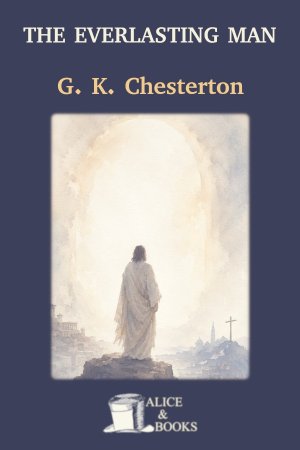
The Everlasting Man
The Everlasting Man is a work of Christian apologetics written by G. K. Chesterton and first published in 1925.
The book presents a broad interpretation of human history, beginning with prehistoric humanity and the rise of ancient civilizations. Chesterton argues that human beings are not merely advanced animals but unique creatures distinguished by art, religion, imagination, and moral awareness.
In the second part, Chesterton examines the life of Jesus Christ and the origins of Christianity. He portrays Christ as a singular and revolutionary figure in history, arguing that Christianity cannot be adequately explained as another myth, philosophy, or product of the ancient world.
Through paradox, humor, and vivid comparisons, Chesterton challenges materialist accounts of human development and presents history as a story shaped by the mystery of humanity and the transformative power of the Christian faith.
"Far away in some strange constellation in skies infinitely remote, there is a small star, which astronomers may some day discover. At least I could never observe in the faces or demeanour of most astronomers or men of science any evidence that they had discovered it; though as a matter of fact they were walking about on it all the time. It is a star that brings forth out of itself very strange plants and very strange animals; and none stranger than the men of science."
Your download has started
PDF · The Everlasting Man — didn't start? Download again
Also available: PDF · EPUB · Read online
Read it on a Kindle
Download the EPUB and send it with Amazon's Send to Kindle (web, app, or your kindle.com email). Modern Kindles accept EPUB directly — no conversion needed.
On iPhone or iPad
Tap the downloaded file, then "Open in Books". It opens in Apple Books, with your reading progress synced across your devices.
On Android
Open the file with Google Play Books or any EPUB reader (ReadEra, Moon+ Reader). PDFs open in any viewer.
On your computer
PDFs open anywhere. For EPUB, try Calibre or Thorium Reader — both free and excellent.
Public domain (US)·No sign-up·DRM-free·Real text, not scans
Copyright note. The Everlasting Man by G. K. Chesterton is believed to be in the public domain in the United States only. It may still be copyrighted in other countries. If you are not in the United States, please check your local laws to ensure this eBook is in the public domain in your country before downloading The Everlasting Man in PDF or EPUB.
- Pages
- 241
- Reading time
- 9 hours 1 minutes
- Pace
- intermediate
- First published
- 1925
- Language
- English
101 years later, still timely
Why Read The Everlasting Man in 2026?
Chesterton retells human history as a mystery about what makes people strange: cave paintings, myth-making, and the disruptive figure of Christ at the center. His tools are paradox, humor, and comparisons that flip familiar assumptions upside down.
Today's connection
Debates about what separates human minds from machines and animals are everywhere; Chesterton's case for human uniqueness—art, imagination, moral awareness—speaks straight into them.
Paradox as method
Arguments that flip assumptions.
History rethought
From cave art to Christendom.
Wit with weight
Humor serving serious claims.
Share this book
About the author
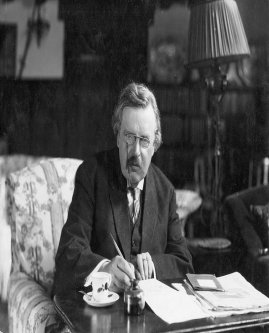
G. K. Chesterton
Paradox as flashlight; essays, fables, and mysteries that defend sanity with play.