The Gay Science
The Gay Science is a philosophical work by Friedrich Nietzsche, first published in 1882 and expanded in 1887. Combining philosophy, poetry, aphorisms, and personal reflection, the book explores knowledge, morality, religion, art, and the meaning of human existence.
Throughout the work, Nietzsche challenges traditional assumptions about truth and morality and encourages readers to approach life with intellectual independence, creativity, and affirmation. It also contains some of his most influential ideas, including the proclamation of the "death of God" and early formulations of the concept of eternal recurrence.
Rather than presenting a single systematic doctrine, Nietzsche uses short sections and shifting styles to question established values and examine how human beings can create meaning in a world without absolute certainties. The result is one of his most lively and influential works, combining philosophical criticism with a celebration of curiosity, self-transformation, and life itself.
"Whether I look with a good or an evil eye upon men, I find them always at one problem, each and all of them: to do that which conduces to the conservation of the human species. And certainly not out of any sentiment of love for this species, but simply because nothing in them is older, stronger, more inexorable, and more unconquerable than that instinct,—because it is precisely the essence of our race and herd. "
This edition appeared in 1910 as Volume Ten of The Complete Works of Friedrich Nietzsche, described as the first complete and authorised English translation and edited by Dr. Oscar Levy. Published under the title The Joyful Wisdom ("La Gaya Scienza"), it was translated by Thomas Common, with the poetry rendered by Paul V. Cohn and Maude D. Petre.
Your download has started
PDF · The Gay Science — didn't start? Download again
Also available: PDF · EPUB · Read online
Read it on a Kindle
Download the EPUB and send it with Amazon's Send to Kindle (web, app, or your kindle.com email). Modern Kindles accept EPUB directly — no conversion needed.
On iPhone or iPad
Tap the downloaded file, then "Open in Books". It opens in Apple Books, with your reading progress synced across your devices.
On Android
Open the file with Google Play Books or any EPUB reader (ReadEra, Moon+ Reader). PDFs open in any viewer.
On your computer
PDFs open anywhere. For EPUB, try Calibre or Thorium Reader — both free and excellent.
Public domain (US)·No sign-up·DRM-free·Real text, not scans
Copyright note. The Gay Science by Friedrich Nietzsche is believed to be in the public domain in the United States only. It may still be copyrighted in other countries. If you are not in the United States, please check your local laws to ensure this eBook is in the public domain in your country before downloading The Gay Science in PDF or EPUB.
- Pages
- 315
- Reading time
- 7 hours 10 minutes
- Pace
- intermediate
- First published
- 1882
- Language
- German
144 years later, still timely
Why Read The Gay Science Today?
Nietzsche moves through aphorisms, songs, and experiments in thought, asking how people might live when inherited certainties lose their force. The shifts of mood are part of the philosophy.
Today's connection
Best approached in short stretches, with room to argue back. Its questions about conviction and meaning reward readers willing to test their own comfortable assumptions.
Thought in fragments
Aphorisms invite return and dispute.
Unsettled values
Familiar beliefs lose their footing.
Intellectual play
Style participates in the inquiry.
Share this book
About the author
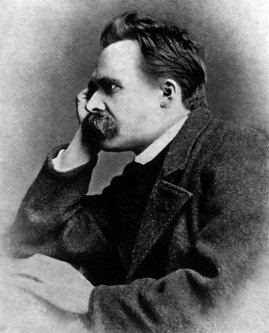
Friedrich Nietzsche
Provocative philosophy that asks what values mean once inherited certainties collapse.