The Grand Inquisitor
The Grand Inquisitor is a novel written by Fyodor Dostoyevsky and first published in 1879.
The story is a chapter from the novel The Brothers Karamazov that has a level of depth and thoughtfulness that has been published as a stand-alone short novel.
Ivan Karamazov tells his brother Alyosha the story of Jesus, who appears in 16th century Seville during the time of the Holy Inquisition. Although both the people and the old cardinal recognize him, the Grand Inquisitor locks him in a dungeon and gives him a monologue about his lack of right to disturb the work of the Church with a new apparition.
It is a thought-provoking story about freedom and human nature. It is almost a poem of hope in humanity itself. That is why it has become one of the most famous passages in modern literature. It is also useful as an introduction to the later reading of The Brothers Karamazov.
"True, again, we have all heard of miracles being wrought ever since the 'age of miracles' passed away to return no more. We had, and still have, our saints credited with performing the most miraculous cures; and, if we can believe their biographers, there have been those among them who have been personally visited by the Queen of Heaven".
This edition of The Grand Inquisitor is based on H.P. Blavatsky's translation.
Your download has started
PDF · The Grand Inquisitor — didn't start? Download again
Also available: PDF · EPUB · MOBI · Read online
Read it on a Kindle
Download the EPUB and send it with Amazon's Send to Kindle (web, app, or your kindle.com email). Modern Kindles accept EPUB directly — no conversion needed.
On iPhone or iPad
Tap the downloaded file, then "Open in Books". It opens in Apple Books, with your reading progress synced across your devices.
On Android
Open the file with Google Play Books or any EPUB reader (ReadEra, Moon+ Reader). PDFs open in any viewer.
On your computer
PDFs open anywhere. For EPUB, try Calibre or Thorium Reader — both free and excellent.
Public domain (US)·No sign-up·DRM-free·Real text, not scans
Copyright note. The Grand Inquisitor by Fyodor Dostoevsky is believed to be in the public domain in the United States only. It may still be copyrighted in other countries. If you are not in the United States, please check your local laws to ensure this eBook is in the public domain in your country before downloading The Grand Inquisitor in PDF or EPUB.
- Pages
- 28
- Reading time
- 49 minutes
- Pace
- Intermediate
- First published
- 1879
- Language
- Russian
- Downloads
- 2,520
147 years later, still timely
Why Read The Grand Inquisitor in 2026?
In a midnight parable, comfort challenges freedom and miracle tempts responsibility. Dostoevsky stages a piercing argument: do we want liberty, or do we secretly prefer bread, spectacle, and a keeper of consciences?
Today's connection
When safety, certainty, and authority feel soothing, this tale asks what we trade away. It clarifies the ethics of paternalism, the psychology of crowds, and the hard work of freedom without guardians.
Freedom vs comfort
Liberty is heavier than it looks.
Parable as stage
A scene sharpens the philosophy.
Conscience tested
Refuse miracle, accept responsibility.
Share this book
About the author
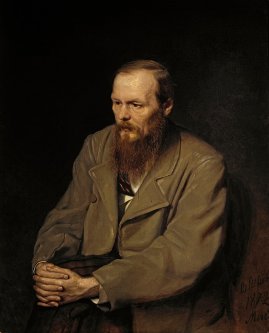
Fyodor Dostoevsky
Psychological depth and moral crisis under pressure; fiction that tests conscience, freedom, and society.