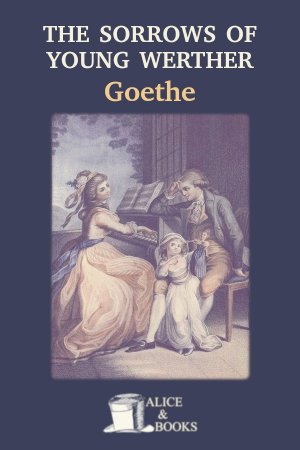
The Sorrows of Young Werther
The Sorrows of Young Werther is an epistolary novel by Johann Wolfgang von Goethe, first published in 1774. It was his first novel.
Told largely through letters to his friend Wilhelm, the novel follows the passionate and increasingly unhappy young Werther. After settling in the countryside, he meets Charlotte and falls deeply in love with her.
Charlotte is already engaged to Albert, whom she later marries, and Werther’s unrequited love becomes increasingly destructive.
Its passionate, despairing tone made it a defining work of the Sturm und Drang movement and brought Goethe international recognition.
This edition of The Sorrows of Young Werther is based on the English translation by R. Dillon Boylan.
Your download has started
PDF · The Sorrows of Young Werther — didn't start? Download again
Also available: PDF · EPUB · MOBI · Read online
Read it on a Kindle
Download the EPUB and send it with Amazon's Send to Kindle (web, app, or your kindle.com email). Modern Kindles accept EPUB directly — no conversion needed.
On iPhone or iPad
Tap the downloaded file, then "Open in Books". It opens in Apple Books, with your reading progress synced across your devices.
On Android
Open the file with Google Play Books or any EPUB reader (ReadEra, Moon+ Reader). PDFs open in any viewer.
On your computer
PDFs open anywhere. For EPUB, try Calibre or Thorium Reader — both free and excellent.
Public domain (US)·No sign-up·DRM-free·Real text, not scans
Copyright note. The Sorrows of Young Werther by Johann Wolfgang von Goethe is believed to be in the public domain in the United States only. It may still be copyrighted in other countries. If you are not in the United States, please check your local laws to ensure this eBook is in the public domain in your country before downloading The Sorrows of Young Werther in PDF or EPUB.
- Pages
- 125
- Reading time
- 3 hours 33 minutes
- Pace
- Intermediate
- First published
- 1774
- Language
- German
- Downloads
- 4,155
252 years later, still timely
Why Read The Sorrows of Young Werther in 2026?
Letters that burn with feeling and art, tracing desire, pride, and the hazards of making life into theater. Romantic intensity at its source.
Today's connection
Read for epistolary intimacy, for the birth of a literary sensibility, and for thoughtful talk about emotion, limits, and the stories we tell ourselves.
Voice on the page
Confession as craft.
Romantic myth
Passion examined, not glamorized.
Artist’s gaze
Nature and feeling tuned together.
These collections include The Sorrows of Young Werther

Share this book
About the author

Johann Wolfgang von Goethe
Worldly curiosity where science, art, and self-education balance into a way of life.