
Pride and Prejudice
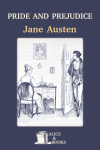
Pride and Prejudice is the most popular novel written by Jane Austen and was published in 1813, initially anonymously.
The novel portrays the English landed gentry in the early 19th century through the Bennet family and their wealthy neighbors. It satirizes a society in which marriage is often shaped by wealth and social status.
The book tells the story of Mrs. Bennet's attempts to marry off her five daughters.
When the eligible Charles Bingley rents a nearby estate, he brings his proud friend Fitzwilliam Darcy into Elizabeth Bennet's social circle. Elizabeth and Darcy initially dislike one another, but their judgments become more complicated as they learn more about each other.
The novel is very popular all over the world, has been translated into more than 30 different languages and has continued to be published, uninterrupted, for more than 200 years. It has been adapted to film, theater, and television on several occasions.
Your download has started
PDF · Pride and Prejudice — didn't start? Download again
Also available: PDF · EPUB · MOBI · Read online
Read it on a Kindle
Download the EPUB and send it with Amazon's Send to Kindle (web, app, or your kindle.com email). Modern Kindles accept EPUB directly — no conversion needed.
On iPhone or iPad
Tap the downloaded file, then "Open in Books". It opens in Apple Books, with your reading progress synced across your devices.
On Android
Open the file with Google Play Books or any EPUB reader (ReadEra, Moon+ Reader). PDFs open in any viewer.
On your computer
PDFs open anywhere. For EPUB, try Calibre or Thorium Reader — both free and excellent.
Public domain (US)·No sign-up·DRM-free·Real text, not scans
Copyright note. Pride and Prejudice by Jane Austen is believed to be in the public domain in the United States only. It may still be copyrighted in other countries. If you are not in the United States, please check your local laws to ensure this eBook is in the public domain in your country before downloading Pride and Prejudice in PDF or EPUB.
- Pages
- 331
- Reading time
- 10 hours 16 minutes
- Pace
- Intermediate
- First published
- 1813
- Language
- English
- Downloads
- 15,501
213 years later, still timely
Why Read Pride and Prejudice in 2026?
Think it is just bonnets and ballrooms? Austen turns social ritual into a sharp study of perception, misjudgment, and how character reveals itself under pressure.
Today's connection
Opinions form quickly these days; profiles, group chats, and public performance nudge us to judge fast. Pride and Prejudice slows the gaze: assemblies, calls, and letters stage how bias hardens and how listening revises it. Read it as practice in better noticing: where pride hides insecurity, where wit protects vulnerability, where steady kindness outlasts sparkle. The comedy of manners becomes a guide to conversation, boundaries, and patience—an education in attention rather than advice. A few chapters can refine your sense of what, and whom, to value.
Better first impressions
At assemblies and visits, talk moves quickly and assumptions calcify. The novel models how to revisit judgments with humility and new evidence so understanding can actually improve.
Wit with care
Lively dialogue tests ideas without cruelty. You learn how humor can draw boundaries and keep respect—while mockery, even when clever, quietly erodes trust.
Seeing character
Through letters, small acts, and pressure, character becomes legible. Attend to patterns—who listens, who grows—so choices feel earned rather than impulsive.
These collections include Pride and Prejudice

Inspiring female writers
Voices that transformed literature—women authors redefining form, freedom, and the lives of their characters.
Explore the collection →
Best Books of the 19th Century
The century’s defining works—from Gothic shadows and social epics to radical experiments in style.
Explore the collection →
Great Coming-Of-Age Books
Journeys from innocence to experience—friendship, identity, and hard-won self-knowledge.
Explore the collection →Indispensable High School Reads
Four years of assigned reading, sorted by how long each book will take you — and a straight answer about the ones you will have to borrow.
Explore the collection →
Classic Romance Novels Worth Reading
Love tested by money, class and time — including the six Austen novels and all seven the Brontë sisters wrote.
Explore the collection →
9th Grade Reading List
Freshman English, with the page count and the reading time on every book — and a straight answer about the ones you will have to borrow.
Explore the collection →Share this book
About the author

Jane Austen
Sharp and witty portraits of love, money, and choice in Regency England.
If this one stays with you…
Agnes GreyAnne Brontë
Jane EyreCharlotte Brontë

ShirleyCharlotte Brontë

The ProfessorCharlotte Brontë
From Pride and Prejudice
To be fond of dancing was a certain step towards falling in love.
I could easily forgive his pride, if he had not mortified mine.
A person who can write a long letter with ease, cannot write ill.
I certainly have not the talent which some people possess, of conversing easily with those I have never seen before.
It is a truth universally acknowledged, that a single man in possession of a good fortune, must be in want of a wife.