
The Voyage of the Beagle
The Voyage of the Beagle is a science book written by Charles Darwin in 1839.
We have before us the diary of a 19th century naturalist, Charles Darwin, in which he describes his years of travelling the world to document species and their relationship with the environment.
Darwin notes how species adapt to their environment, depending on the availability of resources. He finds evidence of past extinct animals through fossils and, in general, explains life on our planet.
Thus, Darwin deals with subjects such as geology, zoology and botany in great detail. It covers everything from the largest species to the smallest invertebrates and marine plankton.
In addition, he describes the culture and society of the time through his interactions with both the indigenous and colonising populations living in those places.
This edition of The Voyage of the Beagle is based on D. Appleton and Company edition.
"After having been twice driven back by heavy southwestern gales, Her Majesty's ship Beagle, a ten-gun brig, under the command of Captain Fitz Roy, R. N., sailed from Devonport on the 27th of December, 1831. The object of the expedition was to complete the survey of Patagonia and Tierra del Fuego, commenced under Captain King in 1826 to 1830,—to survey the shores of Chile, Peru, and of some islands in the Pacific—and to carry a chain of chronometrical measurements round the World".
Your download has started
PDF · The Voyage of the Beagle — didn't start? Download again
Also available: PDF · EPUB · MOBI · Read online
Read it on a Kindle
Download the EPUB and send it with Amazon's Send to Kindle (web, app, or your kindle.com email). Modern Kindles accept EPUB directly — no conversion needed.
On iPhone or iPad
Tap the downloaded file, then "Open in Books". It opens in Apple Books, with your reading progress synced across your devices.
On Android
Open the file with Google Play Books or any EPUB reader (ReadEra, Moon+ Reader). PDFs open in any viewer.
On your computer
PDFs open anywhere. For EPUB, try Calibre or Thorium Reader — both free and excellent.
Public domain (US)·No sign-up·DRM-free·Real text, not scans
Copyright note. The Voyage of the Beagle by Charles Darwin is believed to be in the public domain in the United States only. It may still be copyrighted in other countries. If you are not in the United States, please check your local laws to ensure this eBook is in the public domain in your country before downloading The Voyage of the Beagle in PDF or EPUB.
- Pages
- 526
- Reading time
- 17 hours 23 minutes
- Pace
- Intermediate
- First published
- 1839
- Language
- English
- Downloads
- 2,126
187 years later, still timely
Why Read The Voyage of the Beagle in 2026?
Field notes become a worldview as Darwin records coasts, fossils, and conversations with unshowy precision. It’s travel writing that births questions more than answers, teaching how to look before you label.
Today's connection
Biodiversity, climate, and science communication matter now. This book models curiosity, evidence, and respectful observation.
Naturalist’s craft
Observe, compare, infer.
World in motion
Islands, pampas, cordilleras.
Idea formation
Hypotheses on the hoof.
Share this book
About the author
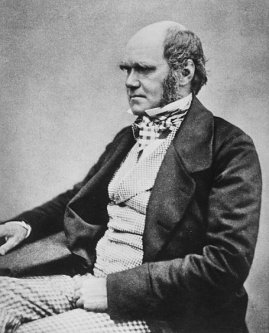
Charles Darwin
Observation made epic; evolution by natural selection explained with patient proof.
