
Twilight of the Idols
Twilight of the Idols: or How to Philosophize with a Hammer is a philosophical work by Friedrich Nietzsche, written in 1888 and first published in 1889. Conceived as a concise introduction to many of his central ideas, the book attacks traditional morality, established philosophy, religion, and cultural conventions.
Nietzsche uses the metaphor of the hammer to describe a method of testing supposedly unquestionable values and ideals to discover whether they are truly solid or merely hollow. Through a series of short, provocative sections, he criticizes figures and traditions that he believes have encouraged decadence, conformity, and the denial of life.
The book examines subjects such as reason, morality, free will, Christianity, education, and European culture. Nietzsche argues against philosophical systems that place an ideal or spiritual world above everyday existence and instead advocates affirming life, instinct, strength, and individual self-development.
"Aristotle says that in order to live alone, a man must be either an animal or a god. The third alternative is lacking: a man must be both—a philosopher."
This English edition was translated by Anthony M. Ludovici.
Your download has started
PDF · Twilight of the Idols — didn't start? Download again
Also available: PDF · EPUB · Read online
Read it on a Kindle
Download the EPUB and send it with Amazon's Send to Kindle (web, app, or your kindle.com email). Modern Kindles accept EPUB directly — no conversion needed.
On iPhone or iPad
Tap the downloaded file, then "Open in Books". It opens in Apple Books, with your reading progress synced across your devices.
On Android
Open the file with Google Play Books or any EPUB reader (ReadEra, Moon+ Reader). PDFs open in any viewer.
On your computer
PDFs open anywhere. For EPUB, try Calibre or Thorium Reader — both free and excellent.
Public domain (US)·No sign-up·DRM-free·Real text, not scans
Copyright note. Twilight of the Idols by Friedrich Nietzsche is believed to be in the public domain in the United States only. It may still be copyrighted in other countries. If you are not in the United States, please check your local laws to ensure this eBook is in the public domain in your country before downloading Twilight of the Idols in PDF or EPUB.
- Pages
- 198
- Reading time
- 5 hours 59 minutes
- Pace
- fast
- First published
- 1889
- Language
- German
137 years later, still timely
Why Read Twilight of the Idols Today?
Nietzsche tests revered ideas with a hammer, mixing short provocations with sustained attacks on philosophy and morality. The book's speed makes its claims vivid without making them easy to accept.
Today's connection
A compact route into argumentative reading: identify the assumption under attack, then decide whether the attack holds. The force of a sentence is not its proof.
Compressed polemic
Brief sections carry large disputes.
Values under examination
Reverence does not end the inquiry.
Reading against the grain
Provocation asks for an answer.
Share this book
About the author
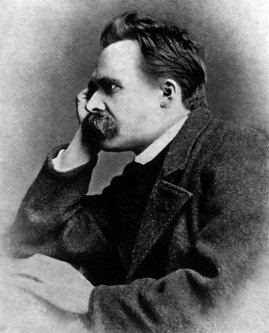
Friedrich Nietzsche
Provocative philosophy that asks what values mean once inherited certainties collapse.