What's Wrong with the World
What's Wrong with the World is a philosophical essay written by G.K. Chesterton and originally published in 1910.
In this work, composed of a collection of essays, G. K. Chesterton addresses a series of topics such as education, politics, big business and women's rights.
Despite being written more than a hundred years ago, the topics he deals with are still relevant and Chesterton criticizes, among other things, the materialism, snobbery and hypocrisy of modern society.
Chesterton comes to many very interesting conclusions such as that society often agrees on what is considered a social evil, but disagrees on the corrective good of that evil. He also talks about our prejudices and how they prevent us from discussing social problems in open forums. He also concludes that it is very difficult to learn from our past because we tend to be afraid of it.
He also criticizes that the industrialism of modern society dehumanizes the individual and that we have sacrificed the human being for the benefit of commercial enterprise.
These essays can be read both as stand-alone and continuous readings, and provide ample opportunity for rereading or annotation.
"A book of modern social inquiry has a shape that is somewhat sharply defined. It begins as a rule with an analysis, with statistics, tables of population, decrease of crime among Congregationalists, growth of hysteria among policemen, and similar ascertained facts; it ends with a chapter that is generally called “The Remedy.”"
Your download has started
PDF · What's Wrong with the World — didn't start? Download again
Also available: PDF · EPUB · MOBI · Read online
Read it on a Kindle
Download the EPUB and send it with Amazon's Send to Kindle (web, app, or your kindle.com email). Modern Kindles accept EPUB directly — no conversion needed.
On iPhone or iPad
Tap the downloaded file, then "Open in Books". It opens in Apple Books, with your reading progress synced across your devices.
On Android
Open the file with Google Play Books or any EPUB reader (ReadEra, Moon+ Reader). PDFs open in any viewer.
On your computer
PDFs open anywhere. For EPUB, try Calibre or Thorium Reader — both free and excellent.
Public domain (US)·No sign-up·DRM-free·Real text, not scans
Copyright note. What's Wrong with the World by G. K. Chesterton is believed to be in the public domain in the United States only. It may still be copyrighted in other countries. If you are not in the United States, please check your local laws to ensure this eBook is in the public domain in your country before downloading What's Wrong with the World in PDF or EPUB.
- Pages
- 174
- Reading time
- 5 hours 6 minutes
- Pace
- Intermediate
- First published
- 1910
- Language
- English
116 years later, still timely
Why Read What's Wrong with the World in 2026?
Paradox, punchlines, and serious civic thought—Chesterton argues about family, education, and the scale of power.
Today's connection
Whether you agree or not, it’s lively fuel for debates on community, subsidiarity, and modern burnout.
Paradox engine
Ideas that flip.
Civic focus
Neighborhoods before abstractions.
Debate ready
Agree, resist, refine.
Share this book
About the author
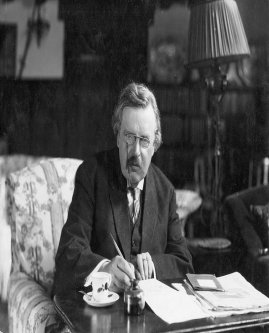
G. K. Chesterton
Paradox as flashlight; essays, fables, and mysteries that defend sanity with play.