A Gentle Spirit
A Gentle Spirit is a short story written by Fyodor Dostoevsky and first published in 1876.
Written as a monologue, the story presents the disjointed thoughts of a middle-aged pawnbroker as he stands beside the body of his young wife after her death by suicide.
Trying to understand what happened, he reconstructs their courtship and marriage while gradually exposing his own pride, possessiveness, and failures of sympathy. The unstable account becomes a close study of guilt and self-deception.
The story explores love and lovelessness, emotional domination, isolation, and the gulf between the husband’s idea of his behavior and his wife’s experience of it.
"Oh, while she is still here, it is still all right; I go up and look at her every minute; but tomorrow they will take her away — and how shall I be left alone? Now she is on the table in the drawing-room, they put two card tables together, the coffin will be here tomorrow — white, pure white “gros de Naples” — but that’s not it …"
This edition of A Gentle Spirit is based on Constance Garnett's translation.
Your download has started
PDF · A Gentle Spirit — didn't start? Download again
Also available: PDF · EPUB · Read online
Read it on a Kindle
Download the EPUB and send it with Amazon's Send to Kindle (web, app, or your kindle.com email). Modern Kindles accept EPUB directly — no conversion needed.
On iPhone or iPad
Tap the downloaded file, then "Open in Books". It opens in Apple Books, with your reading progress synced across your devices.
On Android
Open the file with Google Play Books or any EPUB reader (ReadEra, Moon+ Reader). PDFs open in any viewer.
On your computer
PDFs open anywhere. For EPUB, try Calibre or Thorium Reader — both free and excellent.
Public domain (US)·No sign-up·DRM-free·Real text, not scans
Copyright note. A Gentle Spirit by Fyodor Dostoevsky is believed to be in the public domain in the United States only. It may still be copyrighted in other countries. If you are not in the United States, please check your local laws to ensure this eBook is in the public domain in your country before downloading A Gentle Spirit in PDF or EPUB.
- Pages
- 57
- Reading time
- 1 hour 29 minutes
- Pace
- Intermediate
- First published
- 1876
- Language
- Russian
- Downloads
- 5,243
150 years later, still timely
Why Read A Gentle Spirit in 2026?
A widower explains a tragedy as the truth leaks through. Short, piercing, and uncomfortable—Dostoevsky at his most intimate and self-accusing.
Today's connection
Read with care: it is a study of control, pride, and the stories abusers tell themselves. The unreliable voice teaches listening between lines and naming harm precisely.
Self-deception exposed
Confession that deflects; readers must weigh the gaps.
Power and responsibility
Possession is not love; the text makes that visible.
Voice on trial
Form itself becomes evidence against the speaker.
These collections include A Gentle Spirit



Share this book
About the author
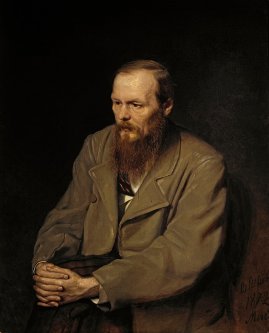
Fyodor Dostoevsky
Psychological depth and moral crisis under pressure; fiction that tests conscience, freedom, and society.