Bobok
Bobok is a short story written by Fyodor Dostoevsky and first published in 1873.
The story follows Ivan Ivanovich, a disillusioned writer, who visits a cemetery after attending a funeral.
There he overhears the conversations of the recently deceased, who continue to speak from their graves, revealing their innermost thoughts and hypocrisies.
Through this surreal eavesdropping, the story satirizes human nature, social norms, and the moral decay of individuals. Dostoevsky uses dark humor and philosophical undertones to examine the boundaries between life and death, and the enduring human need for self-expression.
“Semyon Ardalyonovitch said to me all of a sudden the day before yesterday: ‘Why, will you ever be sober, Ivan Ivanovitch? Tell me that, pray.’ A strange requirement. I did not resent it, I am a timid man; but here they have actually made me out mad. An artist painted my portrait as it happened: ‘After all, you are a literary man,’ he said. I submitted, he exhibited it. I read: ‘Go and look at that morbid face suggesting insanity.’”
Your download has started
PDF · Bobok — didn't start? Download again
Also available: PDF · EPUB · Read online
Read it on a Kindle
Download the EPUB and send it with Amazon's Send to Kindle (web, app, or your kindle.com email). Modern Kindles accept EPUB directly — no conversion needed.
On iPhone or iPad
Tap the downloaded file, then "Open in Books". It opens in Apple Books, with your reading progress synced across your devices.
On Android
Open the file with Google Play Books or any EPUB reader (ReadEra, Moon+ Reader). PDFs open in any viewer.
On your computer
PDFs open anywhere. For EPUB, try Calibre or Thorium Reader — both free and excellent.
Public domain (US)·No sign-up·DRM-free·Real text, not scans
Copyright note. Bobok by Fyodor Dostoevsky is believed to be in the public domain in the United States only. It may still be copyrighted in other countries. If you are not in the United States, please check your local laws to ensure this eBook is in the public domain in your country before downloading Bobok in PDF or EPUB.
- Pages
- 26
- Reading time
- 31 minutes
- Pace
- Intermediate
- First published
- 1873
- Language
- Russian
- Downloads
- 2,055
153 years later, still timely
Why Read Bobok in 2026?
Voices from graves continue their gossip. A brief, biting satire about conscience, corruption, and the stories we tell once we think consequences are over.
Today's connection
It’s darkly funny and perfect for discussing public versus private morals. The premise is outrageous; the insights are familiar.
Macabre wit
Laughter at the edge of silence.
Voices unfiltered
Masks fall when stakes seem gone.
Ethics exposed
Comfort dulls shame—at a cost.
Share this book
About the author
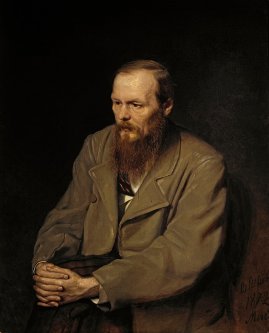
Fyodor Dostoevsky
Psychological depth and moral crisis under pressure; fiction that tests conscience, freedom, and society.