Clarissa
Clarissa; or, The History of a Young Lady is an epistolary novel by Samuel Richardson, published in 1747–1748. It is one of the longest novels in the English language.
Clarissa Harlowe's wealthy family expects her to marry Roger Solmes, a man she strongly dislikes. When she resists, her relatives isolate her and restrict her correspondence, treating marriage as a tool for property and family ambition rather than personal choice.
Robert Lovelace appears to offer an escape, but his charm conceals a sustained campaign of manipulation and coercive control. Through letters exchanged among Clarissa, her friend Anna Howe, Lovelace, and others, readers see how each character interprets—and attempts to control—the same events.
The letter form creates unusual psychological intimacy while exposing the limited legal and social power available to women in eighteenth-century England. Clarissa's struggle to preserve her judgment and dignity becomes a devastating examination of autonomy, reputation, violence, and moral responsibility.
Demanding in scale but remarkably detailed, Clarissa is a landmark in the development of the psychological novel. Its competing voices invite readers to question persuasion, self-justification, and whose account of harm is believed.
Content note: coercive control and sexual violence.
Your download has started
PDF · Clarissa — didn't start? Download again
Also available: PDF · EPUB · MOBI · Read online
Read it on a Kindle
Download the EPUB and send it with Amazon's Send to Kindle (web, app, or your kindle.com email). Modern Kindles accept EPUB directly — no conversion needed.
On iPhone or iPad
Tap the downloaded file, then "Open in Books". It opens in Apple Books, with your reading progress synced across your devices.
On Android
Open the file with Google Play Books or any EPUB reader (ReadEra, Moon+ Reader). PDFs open in any viewer.
On your computer
PDFs open anywhere. For EPUB, try Calibre or Thorium Reader — both free and excellent.
Public domain (US)·No sign-up·DRM-free·Real text, not scans
Copyright note. Clarissa by Samuel Richardson is believed to be in the public domain in the United States only. It may still be copyrighted in other countries. If you are not in the United States, please check your local laws to ensure this eBook is in the public domain in your country before downloading Clarissa in PDF or EPUB.
- Pages
- 2924
- Reading time
- 80 hours 22 minutes
- Pace
- Slow
- First published
- 1748
- Language
- English
- Downloads
- 3,957
278 years later, still timely
Why Read Clarissa in 2026?
One of literature’s most gripping epistolary dramas tracks coercion, grooming, and resistance with forensic attention. Across letters, reputation becomes a battleground and consent a line constantly pressured. Its length is not indulgence but immersion: you feel manipulation tightening, then the hard-won dignity that refuses it.
Today's connection
Essential for discussions of power, blame, and narrative control. The letter form exposes gaslighting in real time, inviting readers to weigh evidence and voice. It is harrowing, humane, and startlingly contemporary in its ethics.
Evidence in letters
Testimony as plot engine.
Coercion revealed
Manipulation seen from within.
Patriarchy on trial
Social rules become weapons.
These collections include Clarissa
Classic Romance Novels Worth Reading
Love tested by money, class and time — including the six Austen novels and all seven the Brontë sisters wrote.
Explore the collection →
The greatest villains in classic literature
The Telegraph picked the 50 greatest villains in literature. These are the ones old enough to be free — and the ones that are not.
Explore the collection →Share this book
About the author
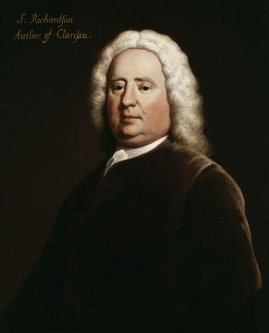
Samuel Richardson
Epistolary realism where letters turn courtship power and law into public ethics.