Crito
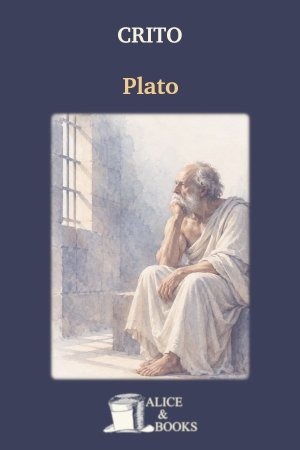
Crito is a philosophical dialogue written by Plato and traditionally dated to around 360 BC. It takes place in the final days of Socrates' life, after he has been condemned to death by the city of Athens.
The dialogue begins when Crito visits Socrates in prison and urges him to escape. He argues that his friends can arrange his rescue and that remaining in prison would mean accepting an unjust sentence and abandoning his responsibilities to his family and followers.
Socrates refuses to flee, insisting that a person should never respond to injustice by committing another injustice. Through an imagined conversation with the Laws of Athens, he argues that escaping would violate the legal system under which he has lived and would damage the principles he has defended throughout his life.
Crito explores enduring questions about justice, personal conscience, obedience to the law, and civic responsibility. The dialogue presents the conflict between self-preservation and the commitment to live according to moral principles, even when doing so carries the highest possible cost.
"SOCRATES: Why have you come at this hour, Crito? it must be quite early?
CRITO: Yes, certainly.
SOCRATES: What is the exact time?
CRITO: The dawn is breaking.
SOCRATES: I wonder that the keeper of the prison would let you in."
This edition was translated by Benjamin Jowett (1817–1893).
Your download has started
PDF · Crito — didn't start? Download again
Also available: PDF · EPUB · Read online
Read it on a Kindle
Download the EPUB and send it with Amazon's Send to Kindle (web, app, or your kindle.com email). Modern Kindles accept EPUB directly — no conversion needed.
On iPhone or iPad
Tap the downloaded file, then "Open in Books". It opens in Apple Books, with your reading progress synced across your devices.
On Android
Open the file with Google Play Books or any EPUB reader (ReadEra, Moon+ Reader). PDFs open in any viewer.
On your computer
PDFs open anywhere. For EPUB, try Calibre or Thorium Reader — both free and excellent.
Public domain (US)·No sign-up·DRM-free·Real text, not scans
Copyright note. Crito by Plato is believed to be in the public domain in the United States only. It may still be copyrighted in other countries. If you are not in the United States, please check your local laws to ensure this eBook is in the public domain in your country before downloading Crito in PDF or EPUB.
- Reading time
- 33 minutes
- Pace
- slow
- First published
- -360
- Language
- Ancient Greek
Share this book
About the author
Plato
Dialogues that teach thinking; reason, myth, and civic life explored in living talk.