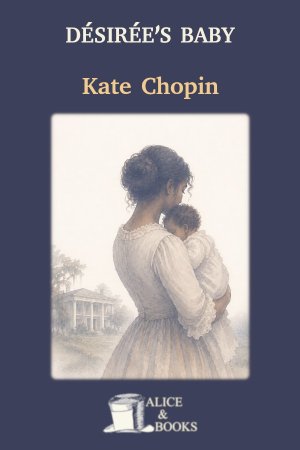
Désirée's Baby
Désirée's Baby is a short story written by Kate Chopin and first published in 1893. Set in antebellum Louisiana, it explores race, identity, prejudice, and the destructive power of social conventions.
The story follows a young woman of unknown parentage who marries a wealthy plantation owner. At first their marriage appears happy, but after the birth of their child, it becomes evident that the baby has African ancestry. In a society built around slavery and rigid racial divisions, suspicion immediately falls on the child's mother.
Convinced that his wife is responsible for their child's mixed heritage, her husband rejects both her and the baby. Devastated, she leaves the plantation with her child. Later, however, a hidden letter reveals a shocking truth about the husband's own ancestry, completely overturning his assumptions.
Through its tragic ending and dramatic irony, Désirée's Baby exposes the cruelty and hypocrisy of racial prejudice and shows how pride and social expectations can destroy innocent lives.
"As the day was pleasant, Madame Valmondé drove over to L'Abri to see Désirée and the baby.
It made her laugh to think of Désirée with a baby. Why, it seemed but yesterday that Désirée was little more than a baby herself; when Monsieur in riding through the gateway of Valmondé had found her lying asleep in the shadow of the big stone pillar."
Your download has started
PDF · Désirée's Baby — didn't start? Download again
Also available: PDF · EPUB · Read online
Read it on a Kindle
Download the EPUB and send it with Amazon's Send to Kindle (web, app, or your kindle.com email). Modern Kindles accept EPUB directly — no conversion needed.
On iPhone or iPad
Tap the downloaded file, then "Open in Books". It opens in Apple Books, with your reading progress synced across your devices.
On Android
Open the file with Google Play Books or any EPUB reader (ReadEra, Moon+ Reader). PDFs open in any viewer.
On your computer
PDFs open anywhere. For EPUB, try Calibre or Thorium Reader — both free and excellent.
Public domain (US)·No sign-up·DRM-free·Real text, not scans
Copyright note. Désirée's Baby by Kate Chopin is believed to be in the public domain in the United States only. It may still be copyrighted in other countries. If you are not in the United States, please check your local laws to ensure this eBook is in the public domain in your country before downloading Désirée's Baby in PDF or EPUB.
- Pages
- 9
- Reading time
- 11 minutes
- Pace
- intermediate
- First published
- 1893
- Language
- English
133 years later, still timely
Why Read Désirée's Baby Today?
A plantation marriage rests on assumptions about ancestry that neither love nor wealth can secure. Chopin compresses racial hierarchy and a husband's power into a devastating domestic story.
Today's connection
It opens discussion of how prejudice assigns blame before examining evidence, and how a family can enforce the violence of the society around it.
Fragile belonging
Acceptance depends on an imposed category.
Domestic authority
A husband controls the terms.
Dramatic irony
Certainty outruns what anyone knows.
Share this book
About the author
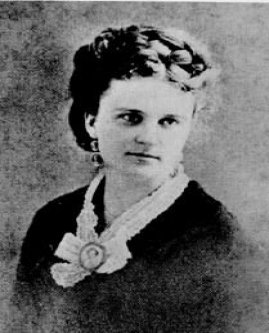
Kate Chopin
Desire marriage and selfhood in exact clear prose; modern before the label.