
First Love
First Love is a novella by Ivan Turgenev, published in 1860.
Framed as a reminiscence told among friends, the narrative follows a Moscow teenager who looks back on a summer at his family’s country house and his sudden infatuation with a captivating neighbor. The retrospective voice lends the tale a reflective, confessional tone, turning a youthful episode into a measured reckoning with time and memory.
As glances become rituals and hope curdles into doubt, the story probes the clash between rational restraint and sentimental impulse. Turgenev shows how first love awakens the self while exposing its limits, tracing the intensity of adolescent desire rather than offering a consoling ending.
Set against gardens, verandas, and quiet rooms, the book uses everyday realism and delicate psychological detail to capture the rhythms of domestic life. In its brief span it becomes a classic meditation on awakening, disillusionment, and the making of an inner life.
This edition of the book is based on the text published on Project Gutenberg and the translator is Constance Garnett.
Your download has started
PDF · First Love — didn't start? Download again
Also available: PDF · EPUB · MOBI · Read online
Read it on a Kindle
Download the EPUB and send it with Amazon's Send to Kindle (web, app, or your kindle.com email). Modern Kindles accept EPUB directly — no conversion needed.
On iPhone or iPad
Tap the downloaded file, then "Open in Books". It opens in Apple Books, with your reading progress synced across your devices.
On Android
Open the file with Google Play Books or any EPUB reader (ReadEra, Moon+ Reader). PDFs open in any viewer.
On your computer
PDFs open anywhere. For EPUB, try Calibre or Thorium Reader — both free and excellent.
Public domain (US)·No sign-up·DRM-free·Real text, not scans
Copyright note. First Love by Ivan Turgenev is believed to be in the public domain in the United States only. It may still be copyrighted in other countries. If you are not in the United States, please check your local laws to ensure this eBook is in the public domain in your country before downloading First Love in PDF or EPUB.
- Pages
- 78
- Reading time
- 2 hours 5 minutes
- Pace
- Intermediate
- First published
- 1860
- Language
- Russian
- Downloads
- 10,774
166 years later, still timely
Why Read First Love in 2026?
Summer gardens, a rented house, and a boy who mistakes intensity for understanding. "First Love" moves with the andante of memory: glances, small cruelties, and the education of feeling. Turgenev shows how first attachment teaches scale—what words cost, what silence hides—without melodrama. Brief, lucid, and exact, it still feels like overheard life.
Today's connection
The novella models attention rather than advice. It respects confusion, consent, and the slow learning of boundaries, making it ideal for book clubs and classrooms. Framed as recollection, it shows how memory edits our own motives. You finish with sharper empathy and a steadier tone for talking about beginnings.
Memory as lens
An older narrator revisits a younger self without excuses. Distance clarifies feeling rather than dulling it.
Social codes, small signals
Gestures, timing, and polite talk carry force. The story trains attention to what people mean but do not say.
Coming-of-age without noise
No grand speeches, just truthful shifts. The form keeps feeling honest and proportionate.
These collections include First Love

Best Books of the 19th Century
The century’s defining works—from Gothic shadows and social epics to radical experiments in style.
Explore the collection →


Must Read Russian Classics
Moral dilemmas and vast inner lives — and eight of these are under eighty pages.
Explore the collection →


Classics Under 100 Pages
Short enough to finish today — and none of them minor. Page count and reading time on every card.
Explore the collection →Share this book
About the author
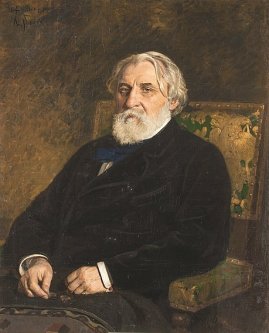
Ivan Turgenev
Lyrical realism of land, youth, and generational debate with gentle authority.
If this one stays with you…
Sense and SensibilityJane Austen
Pride and PrejudiceJane Austen
EmmaJane Austen
Agnes GreyAnne Brontë
From First Love
Take for yourself what you can, and don’t be ruled by others; to belong to oneself—the whole savour of life lies in that
Beware of the love of women; beware of that ecstasy, that slow poison.
There is a sweetness in being the sole source, the autocratic and irresponsible cause of the greatest joy and profoundest pain to another.
Know how to will, and you will be free, and will lead.
I did not want to know whether I was loved, and I did not want to acknowledge to myself that I was not loved.