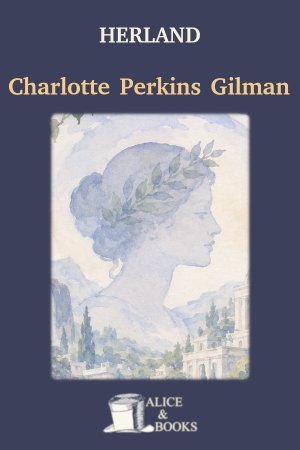
Herland
Herland is a utopian novel by Charlotte Perkins Gilman, first published in 1915.
The story follows three American explorers who discover an isolated country inhabited entirely by women. For centuries, the women of Herland have reproduced without men and created a peaceful, highly organized society centered on education, cooperation, and motherhood.
As the visitors learn about Herland, their assumptions about gender, marriage, family, and civilization are repeatedly challenged. Their different reactions reveal the limitations of traditional masculine attitudes and highlight the contrast between their culture and the values of Herland.
Combining adventure, satire, and social criticism, the novel examines gender equality, social progress, and the influence of cultural expectations. It remains an important work of early feminist literature and a thoughtful critique of the society in which Gilman lived.
"This is written from memory, unfortunately. If I could have brought with me the material I so carefully prepared, this would be a very different story. Whole books full of notes, carefully copied records, firsthand descriptions, and the pictures—that’s the worst loss."
Your download has started
PDF · Herland — didn't start? Download again
Also available: PDF · EPUB · Read online
Read it on a Kindle
Download the EPUB and send it with Amazon's Send to Kindle (web, app, or your kindle.com email). Modern Kindles accept EPUB directly — no conversion needed.
On iPhone or iPad
Tap the downloaded file, then "Open in Books". It opens in Apple Books, with your reading progress synced across your devices.
On Android
Open the file with Google Play Books or any EPUB reader (ReadEra, Moon+ Reader). PDFs open in any viewer.
On your computer
PDFs open anywhere. For EPUB, try Calibre or Thorium Reader — both free and excellent.
Public domain (US)·No sign-up·DRM-free·Real text, not scans
Copyright note. Herland by Charlotte Perkins Gilman is believed to be in the public domain in the United States only. It may still be copyrighted in other countries. If you are not in the United States, please check your local laws to ensure this eBook is in the public domain in your country before downloading Herland in PDF or EPUB.
- Pages
- 158
- Reading time
- 4 hours 24 minutes
- Pace
- intermediate
- First published
- 1915
- Language
- English
111 years later, still timely
Why Read Herland in 2026?
Three male explorers find a country run entirely by women, and every assumption they carry in with them cracks on contact. Gilman plays it as adventure and satire at once, letting her visitors' reactions expose their own culture more than Herland's.
Today's connection
Arguments about gender roles, care work, and how societies get designed haven't cooled; this thought experiment asks which of our "natural" arrangements are just habits.
Society redesigned
Cooperation as infrastructure.
Satire by contrast
The visitors expose themselves.
Thought experiment
Which norms are habits?
Share this book
About the author
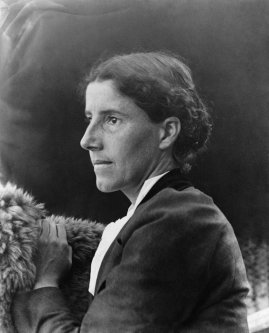
Charlotte Perkins Gilman
Feminist clarity on work, home, and mental health; sharp stories and social design.