How It Feels To Be Colored Me
How It Feels to Be Colored Me is an autobiographical essay written by Zora Neale Hurston and first published in 1928.
In the essay, Hurston reflects on her childhood in Eatonville, Florida, an all-Black community where she grew up with a strong sense of identity and belonging. After moving away, she became more conscious of how American society viewed her through the lens of race, but she refused to let that perception define her. Instead, she presents a confident and independent sense of self.
Hurston explores what it means to be a Black woman in the United States while rejecting the idea that her identity should be centered on suffering. She emphasizes individuality, resilience, and personal freedom, describing moments when she feels intensely aware of race and others when she simply experiences herself as a person.
With wit, energy, and vivid imagery, How It Feels to Be Colored Me offers a distinctive perspective on race, identity, and self-determination, making it one of Hurston's most widely read essays.
"I am colored but I offer nothing in the way of extenuating circumstances except the fact that I am the only Negro in the United States whose grandfather on the mother’s side was not an Indian chief."
Your download has started
PDF · How It Feels To Be Colored Me — didn't start? Download again
Also available: PDF · EPUB · Read online
Read it on a Kindle
Download the EPUB and send it with Amazon's Send to Kindle (web, app, or your kindle.com email). Modern Kindles accept EPUB directly — no conversion needed.
On iPhone or iPad
Tap the downloaded file, then "Open in Books". It opens in Apple Books, with your reading progress synced across your devices.
On Android
Open the file with Google Play Books or any EPUB reader (ReadEra, Moon+ Reader). PDFs open in any viewer.
On your computer
PDFs open anywhere. For EPUB, try Calibre or Thorium Reader — both free and excellent.
Public domain (US)·No sign-up·DRM-free·Real text, not scans
Copyright note. How It Feels To Be Colored Me by Zora Neale Hurston is believed to be in the public domain in the United States only. It may still be copyrighted in other countries. If you are not in the United States, please check your local laws to ensure this eBook is in the public domain in your country before downloading How It Feels To Be Colored Me in PDF or EPUB.
- Pages
- 7
- Reading time
- 8 minutes
- Pace
- intermediate
- First published
- 1928
- Language
- English
98 years later, still timely
Why Read How It Feels To Be Colored Me Today?
Hurston writes identity as something lived, changing with place, music, and company. Her essay moves through childhood memory and vivid metaphor with an independence that resists being reduced to a category.
Today's connection
A lively text for discussing self-description and imposed labels. Its confidence invites close reading without requiring one person's experience to stand for everyone's.
A changing context
Race feels different in different rooms.
Individual voice
The essay insists on a particular self.
Metaphor in motion
Images do the argumentative work.
Share this book
About the author
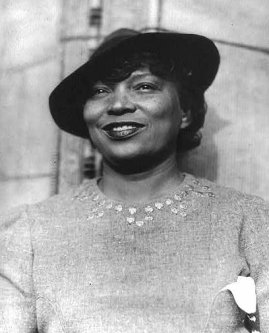
Zora Neale Hurston
Harlem Renaissance voice; folklore and Black Southern life in living vernacular.