Lady Chatterley's Lover
Lady Chatterley's Lover, sometimes called Lady Chatterley for short, is a novel written by David Herbert Lawrence and published in 1928.
The book tells us about the life of Constance, who is married to a paraplegic upper-class man as a result of an injury in the war. His disability and not being too affectionate with Constanza causes the relationship to cool down and they distance themselves. Due to Constanza's sexual frustration, she eventually has an affair with another working-class man, the gamekeeper.
The work caused a scandal and was banned at the time, due to the scenes where sexual relations were explicitly described.
As a curious and amazing fact, the book anticipates in vitro fertilization, saying that "babies will be had in bottles and sexuality will no longer be necessary".
Your download has started
PDF · Lady Chatterley's Lover — didn't start? Download again
Also available: PDF · EPUB · MOBI · Read online
Read it on a Kindle
Download the EPUB and send it with Amazon's Send to Kindle (web, app, or your kindle.com email). Modern Kindles accept EPUB directly — no conversion needed.
On iPhone or iPad
Tap the downloaded file, then "Open in Books". It opens in Apple Books, with your reading progress synced across your devices.
On Android
Open the file with Google Play Books or any EPUB reader (ReadEra, Moon+ Reader). PDFs open in any viewer.
On your computer
PDFs open anywhere. For EPUB, try Calibre or Thorium Reader — both free and excellent.
Public domain (US)·No sign-up·DRM-free·Real text, not scans
Copyright note. Lady Chatterley's Lover by D. H. Lawrence is believed to be in the public domain in the United States only. It may still be copyrighted in other countries. If you are not in the United States, please check your local laws to ensure this eBook is in the public domain in your country before downloading Lady Chatterley's Lover in PDF or EPUB.
- Pages
- 324
- Reading time
- 9 hours 48 minutes
- Pace
- Intermediate
- First published
- 1928
- Language
- English
- Downloads
- 6,498
98 years later, still timely
Why Read Lady Chatterley's Lover in 2026?
A marriage of convenience meets a body that refuses to live only in the head. Lawrence joins class critique with candid intimacy to ask what wholeness demands. Read for honesty, tenderness, and the cost of awakening.
Today's connection
Beyond its scandal history lies a serious argument: industrial life can thin feeling, and healing may require courage, attention, and risk. The novel treats sex as communication and reciprocity, not shock. Approach with maturity; discuss consent, class, disability, and care. Its directness feels modern because respect, not prudery, guides it.
Wholeness, not hush
Body and mind converse; neither is enough alone.
Class and care
Work, wealth, and access shape intimacy.
Language of touch
Consent and reciprocity frame desire.
These collections include Lady Chatterley's Lover
Classic Romance Novels Worth Reading
Love tested by money, class and time — including the six Austen novels and all seven the Brontë sisters wrote.
Explore the collection →


Banned Classic Books
Each of these has an authority, a date and a reason attached. Where the famous story is wrong, the page says so.
Explore the collection →Share this book
About the author
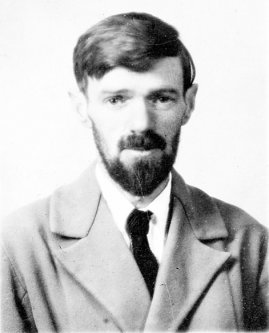
D. H. Lawrence
Sensual intelligence and psychological candor amid modern industry and constraint.