Collection · Curated by Alice

Classic books that became famous movies

Every book here names the film it became, and links to it. Read the book before, or after, the version you have seen.

33
books to download
800 BC–1925
2725 years apart
PDF & EPUB
free, no sign-up

Almost everyone on this page is better known from a screen than from a page. That is not a complaint: film is what kept most of these books being read at all, and a few of them exist in the popular imagination almost entirely as a film.

What this page does that a list of titles cannot: name the adaptation. Frankenstein means a Universal film from 1931 to most people, not the 1818 novel, and the two are so different that the flat head and the neck bolts are not in the book at all. Every entry below names its film and links to its IMDb page.

If you only read one, read the one whose film you think you already know.

How this list was built

One rule, applied strictly: a book is here only if we can name the film it became. In August 2026 the collection went from sixty titles to thirty-three for that reason.

Twenty-eight books left the page. Six have no adaptation anyone could name. Twenty-one have adaptations too scattered to single one out without guessing. One is famous for a television series rather than a film. The Odyssey came in, and all twenty-eight are still on the site.

Where several adaptations compete, the entry names the version that shaped the book''s image rather than the newest or the highest-rated — the Frankenstein people picture is still the 1931 one. Every film named here was checked against IMDb individually. None was written from memory.

In cinemas now

Christopher Nolan, July 2026

The oldest book on this page had the biggest live-action opening of the year. Worth reading first, and it is free.

Released 17 July 2026

The Odyssey

Homer

800 BC · 440 pages · ~10 hours 5 minutes

Nearly three thousand years old and one of the biggest films of the year. Ten years to get home, and Odysseus spends most of the poem lying about who he is to people who would help him if he told the truth.

Film The Odyssey (2026), dir. Christopher Nolan IMDb

Get the book

Start here

Six books whose films you have probably seen, or absorbed without seeing

Each has an adaptation dominant enough to shape what the title means. Reading the book after the film is the interesting order, because in every case the book is stranger.

Start here

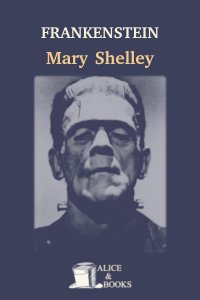
Frankenstein

Mary Shelley

1818 · 203 pages · ~6 hours 15 minutes

The monster is articulate, reads Milton and argues its case for six chapters. The flat head and the neck bolts are Universal's, not Mary Shelley's, and neither is the name Frankenstein, which belongs to the man who made him.

Film Frankenstein (1931), dir. James Whale IMDb

Get the book

Dracula

Bram Stoker

1897 · 355 pages · ~13 hours 28 minutes

Told entirely in letters, diaries and newspaper cuttings, and the Count appears in remarkably few of them. Lugosi's cape and accent are the 1931 film's; the novel's vampire has a moustache and climbs down walls head first.

Film Dracula (1931), dir. Tod Browning IMDb

Get the book

When the film went its own way

Five adaptations that keep the premise and discard the book. If you come to these expecting the film you know, you will not find it — which is the reason to read them.

Different book entirely

Gulliver's Travels

Jonathan Swift

1726 · 283 pages · ~8 hours 44 minutes

The 2010 film keeps a big man in a small country, nods at a giant one, and throws away the two that matter most. Swift wrote four voyages, and the fourth — where Gulliver decides he prefers horses to people — is the one that made his reputation as a misanthrope.

Film Gulliver's Travels (2010), dir. Rob Letterman IMDb

Get the book

Faithful, and famous for it

Adaptations that stayed close enough that the film is recognisably the book, even where they cut or rearrange. Reading afterwards fills in what the running time left out.

Where the screen found science fiction

Cinema found its future here: the film usually called the first science-fiction film ever made comes from one of these four, in 1902, and the other three waited decades for effects that could keep up with them.

The Time Machine

H. G. Wells

1895 · 80 pages · ~2 hours 43 minutes

The book that gave the language the phrase. Wells goes to the year 802,701 and finds the class system has become two species; the ending jumps thirty million years further, to a dying sun and a beach with almost nothing left alive on it. The 2002 version was directed by his great-grandson.

Film The Time Machine (2002), dir. Simon Wells IMDb

Get the book

The War of the Worlds

H. G. Wells

1898 · 161 pages · ~5 hours 4 minutes

Wells set it in the Surrey suburbs he lived in, street by street, which is why it frightened people. Every adaptation moves it somewhere else — Spielberg to New Jersey, the 1953 film to California, the 1938 radio broadcast to Grover's Mill — and the panic that broadcast supposedly caused was mostly invented by the newspapers.

Film War of the Worlds (2005), dir. Steven Spielberg IMDb

Get the book

Adventure, and the screen that lives on it

The books that gave film its pirates, its swordfights and its jungle, plus one that gave it a monster. Several have been adapted so often that the version named below is simply the one that stuck.

The oldest but one

Beowulf

Unknown

1000 · 175 pages · ~3 hours 36 minutes

A hall, a monster, the monster's mother, and fifty years later a dragon. Written in Old English by a poet nobody can name or date, surviving in a single manuscript from around the year 1000, and filmed in motion capture in 2007.

Film Beowulf (2007), dir. Robert Zemeckis IMDb

Get the book

Shakespeare on screen

Three plays, filmed more often than anything else here

No writer has been adapted more. These three have been filmed for a century in every register, and the words underneath were fixed in print four hundred years ago.

Four more

Books whose adaptations are famous without replacing them.

Enjoyed this collection? Share it!