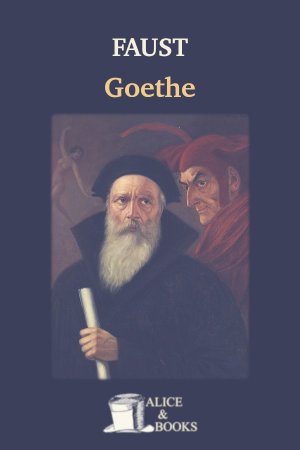
Faust
Faust is a tragic play by Johann Wolfgang von Goethe, published in two parts in 1808 and 1832.
Composed in verse and cast as theatrical dialogue, it blends folk legend, philosophy, and satire. While it has long been performed on stage, its vast range of scenes and symbols, especially in Part Two, makes it equally suited to reading, where its rich allegory and intellectual breadth fully register.
The drama opens with a disillusioned scholar who believes he has reached the limits of knowledge and happiness and flirts with self-destruction. Into this despair steps a tempter who proposes a wager on achieving total satisfaction, launching a journey through love, error, and awakening that tests the price of human desire.
Part One traces intimate tragedy; Part Two expands into myth and empire, turning Faust’s quest into a meditation on ambition, responsibility, and redemption. Across both, Goethe explores the power of restless striving and the moral hazards of boundless yearning, crafting a work that remains a touchstone of modern thought and theater.
"Night.
Faust discovered sitting restless at his desk, in a narrow high-vaulted Gothic chamber.
Faust.
There now, I’ve toiled my way quite through
Law, Medicine, and Philosophy,
And, to my sorrow, also thee,
Theology, with much ado;
And here I stand, poor human fool,
As wise as when I went to school."
Your download has started
PDF · Faust — didn't start? Download again
Also available: PDF · EPUB · MOBI · Read online
Read it on a Kindle
Download the EPUB and send it with Amazon's Send to Kindle (web, app, or your kindle.com email). Modern Kindles accept EPUB directly — no conversion needed.
On iPhone or iPad
Tap the downloaded file, then "Open in Books". It opens in Apple Books, with your reading progress synced across your devices.
On Android
Open the file with Google Play Books or any EPUB reader (ReadEra, Moon+ Reader). PDFs open in any viewer.
On your computer
PDFs open anywhere. For EPUB, try Calibre or Thorium Reader — both free and excellent.
Public domain (US)·No sign-up·DRM-free·Real text, not scans
Copyright note. Faust by Johann Wolfgang von Goethe is believed to be in the public domain in the United States only. It may still be copyrighted in other countries. If you are not in the United States, please check your local laws to ensure this eBook is in the public domain in your country before downloading Faust in PDF or EPUB.
- Pages
- 240
- Reading time
- 4 hours 47 minutes
- Pace
- Intermediate
- First published
- 1832
- Language
- German
- Downloads
- 4,229
194 years later, still timely
Why Read Faust in 2026?
The definitive drama of striving and limit. A scholar bargains for boundless experience, and the play tests knowledge, desire, service, and salvation with language that still crackles. It is philosophy staged as spectacle and a manual on what grows a person and what hollows one out.
Today's connection
Optimization culture tempts shortcuts. Faust supplies an ethics of ambition and a vocabulary for trade-offs you will face.
Ambition mapped
What to seek, what to refuse.
Bargains counted
Means and ends face off.
Spectacle that thinks
Ideas with pulse.
Share this book
About the author

Johann Wolfgang von Goethe
Worldly curiosity where science, art, and self-education balance into a way of life.