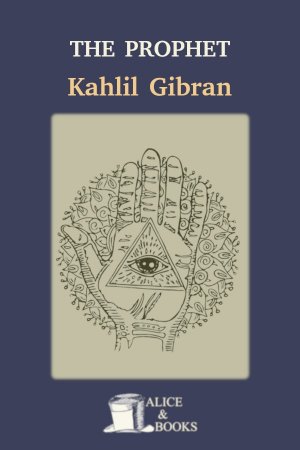
The Prophet
The Prophet is a collection of prose poems written by Khalil Gibran and originally published in 1923. It deals with various topics such as love, marriage, children, work, and death.
Across 26 sections, the prophet Almustafa prepares to leave the city of Orphalese after twelve years. Before he boards his ship, its people ask him to speak about central aspects of human experience.
Each address uses poetic and aphoristic language to approach its subject through images and paradoxes rather than through a continuous argument.
Its framing narrative and recurring themes give the separate prose poems a unified arc, making The Prophet Gibran’s best-known English-language work.
Your download has started
PDF · The Prophet — didn't start? Download again
Also available: PDF · EPUB · MOBI · Read online
Read it on a Kindle
Download the EPUB and send it with Amazon's Send to Kindle (web, app, or your kindle.com email). Modern Kindles accept EPUB directly — no conversion needed.
On iPhone or iPad
Tap the downloaded file, then "Open in Books". It opens in Apple Books, with your reading progress synced across your devices.
On Android
Open the file with Google Play Books or any EPUB reader (ReadEra, Moon+ Reader). PDFs open in any viewer.
On your computer
PDFs open anywhere. For EPUB, try Calibre or Thorium Reader — both free and excellent.
Public domain (US)·No sign-up·DRM-free·Real text, not scans
Copyright note. The Prophet by Khalil Gibran is believed to be in the public domain in the United States only. It may still be copyrighted in other countries. If you are not in the United States, please check your local laws to ensure this eBook is in the public domain in your country before downloading The Prophet in PDF or EPUB.
- Pages
- 49
- Reading time
- 1 hour 3 minutes
- Pace
- Intermediate
- First published
- 1923
- Language
- English
- Downloads
- 6,331
103 years later, still timely
Why Read The Prophet in 2026?
Poetry that speaks plainly about love, work, grief, and freedom. One page can travel with you all week.
Today's connection
Gibran’s aphorisms invite reflection without dogma. Read a section a day—on marriage, children, giving—and notice how the lines return at useful moments. It’s a companion more than a lecture.
Tender clarity
Gentle words that still make demands.
Portable practice
Short passages seed long conversations.
Wisdom without jargon
No system—just humane insight.
These collections include The Prophet
Share this book
About the author

Khalil Gibran
Lyric wisdom about love, work, and freedom in clear, portable lines.
If this one stays with you…
The Divine ComedyDante Alighieri
The New LifeDante Alighieri
Dante's InfernoDante Alighieri

The Ballad of Reading GaolOscar Wilde
From The Prophet
Love gives naught but itself and takes naught but from itself, Love possesses not nor would it be possessed: For love is sufficient unto love.
In the sweetness of friendship let there be laughter, and sharing of pleasures. For in the dew of little things, does the heart find its morning and is refreshed.
And if it is a fear you would dispel, the seat of that fear is in your heart and not in the hand of the feared.
For what is evil but good tortured by its own hunger and thirst?
The lust for comfort, that stealthy thing that enters the house a guest, and then becomes a host, and then a master.