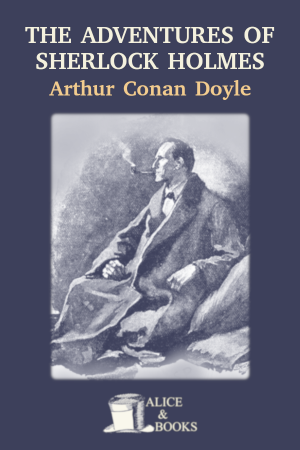
The Adventures of Sherlock Holmes
The Adventures of Sherlock Holmes is a collection of twelve short stories, first published on 14 October 1892. The stories had previously been published in different monthly installments of The Strand magazine.
It contains the earliest short stories featuring the consulting detective Sherlock Holmes. Most of the stories are told in the first person through Dr. Watson.
They do not have a chronology between them, but are compiled in the same sequence. These are different and independent stories with a common element: the presence of Sherlock Holmes and Dr. Watson.
They present Sherlock Holmes as a just man in an unjust world, in which social injustices occur.
The book includes the following stories:
- A Scandal in Bohemia
- The Red-Headed League
- A Case of Identity
- The Boscombe Valley Mystery
- The Five Orange Pips
- The Man with the Twisted Lip
- The Adventure of the Blue Carbuncle
- The Adventure of the Speckled Band
- The Adventure of the Engineer's Thumb
- The Adventure of the Noble Bachelor
- The Adventure of the Beryl Coronet
- The Adventure of the Copper Beeches
Your download has started
PDF · The Adventures of Sherlock Holmes — didn't start? Download again
Also available: PDF · EPUB · MOBI · Read online
Read it on a Kindle
Download the EPUB and send it with Amazon's Send to Kindle (web, app, or your kindle.com email). Modern Kindles accept EPUB directly — no conversion needed.
On iPhone or iPad
Tap the downloaded file, then "Open in Books". It opens in Apple Books, with your reading progress synced across your devices.
On Android
Open the file with Google Play Books or any EPUB reader (ReadEra, Moon+ Reader). PDFs open in any viewer.
On your computer
PDFs open anywhere. For EPUB, try Calibre or Thorium Reader — both free and excellent.
Public domain (US)·No sign-up·DRM-free·Real text, not scans
Copyright note. The Adventures of Sherlock Holmes by Arthur Conan Doyle is believed to be in the public domain in the United States only. It may still be copyrighted in other countries. If you are not in the United States, please check your local laws to ensure this eBook is in the public domain in your country before downloading The Adventures of Sherlock Holmes in PDF or EPUB.
- Pages
- 262
- Reading time
- 8 hours 47 minutes
- Pace
- Intermediate
- First published
- 1892
- Language
- English
- Downloads
- 6,881
134 years later, still timely
Why Read The Adventures of Sherlock Holmes in 2026?
The template of modern detection: observation, pattern, and friendship. “The Adventures of Sherlock Holmes” collects cases that teach how to see—ash, footprints, alibis—and why kindness sometimes outruns brilliance. Start anywhere; the rhythm is addictive.
Today's connection
Holmes is less superhuman than systematic. The stories model bias-checking, listening, and patient experiment—skills that help beyond crime fiction. London’s fog and noise make a great lab for inference, and Watson’s warmth keeps the work human. Ideal for new mystery readers and for classes practicing evidence-based reasoning.
Observation drills
Details become clues only after you name them.
Friendship engine
Watson’s steadiness makes genius usable.
Victorian lab
City life supplies variables to test.
Share this book
About the author
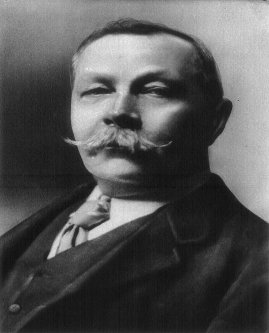
Arthur Conan Doyle
Evidence driven adventure and humane curiosity behind the world famous consulting detective.