Macbeth
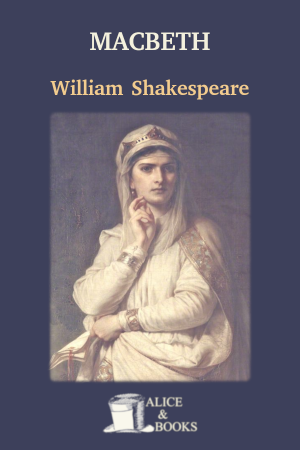
Macbeth is a tragedy written by William Shakespeare around 1606 and first printed in the Folio of 1623. It dramatizes the corrosive effects of political ambition and is considered one of his finest plays.
The book tells the story of a Scottish general named Macbeth who ascends to the throne as King Macbeth, after murdering King Duncan.
He kills again to keep what he has taken and becomes a tyrant, which leads to his downfall. The tragedy also tells the story of Macbeth's wife, Lady Macbeth, who pushes him into the first murder and then breaks under the weight of it.
As in the Greek tragedies, Macbeth learns his destiny through a prophecy: three witches announce that he will become king of Scotland and that his companion in arms, Banquo, will father a long line of kings. A second set of promises later convinces him that he cannot be beaten — and means the opposite of what he takes it to mean.
Its main themes are ambition, power, betrayal and death.
Your download has started
PDF · Macbeth — didn't start? Download again
Also available: PDF · EPUB · MOBI · Read online
Read it on a Kindle
Download the EPUB and send it with Amazon's Send to Kindle (web, app, or your kindle.com email). Modern Kindles accept EPUB directly — no conversion needed.
On iPhone or iPad
Tap the downloaded file, then "Open in Books". It opens in Apple Books, with your reading progress synced across your devices.
On Android
Open the file with Google Play Books or any EPUB reader (ReadEra, Moon+ Reader). PDFs open in any viewer.
On your computer
PDFs open anywhere. For EPUB, try Calibre or Thorium Reader — both free and excellent.
Public domain (US)·No sign-up·DRM-free·Real text, not scans
Copyright note. Macbeth by William Shakespeare is believed to be in the public domain in the United States only. It may still be copyrighted in other countries. If you are not in the United States, please check your local laws to ensure this eBook is in the public domain in your country before downloading Macbeth in PDF or EPUB.
- Pages
- 141
- Reading time
- 1 hour 33 minutes
- Pace
- Fast
- First published
- 1606
- Language
- English
- Downloads
- 5,973
420 years later, still timely
Why Read Macbeth in 2026?
Ambition answers prophecy and meets conscience. Short, fierce, unforgettable.
Today's connection
Shakespeare shows how desire, fear, and suggestion can move a state. Read it to study persuasion, guilt, and the cost of shortcuts—in language that still sparks.
Fast tragedy
No filler—just mounting consequence.
Speech as spell
Words make deeds feel inevitable.
Power and price
Victory without sleep isn’t victory.
These collections include Macbeth
Movies based on books
Every book here names the film it became, and links to it. Read the book before, or after, the version you have seen.
Explore the collection →
Indispensable High School Reads
Four years of assigned reading, sorted by how long each book will take you — and a straight answer about the ones you will have to borrow.
Explore the collection →Share this book
About the author

William Shakespeare
Electric language and living characters; forms that still teach rhythm, wit, and range.