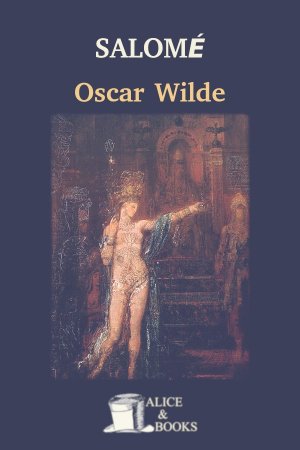
Salomé
Salome is a one-act tragedy written by Oscar Wilde and originally published in 1891. It was originally written in French and performed in Paris in 1894.
Drawing on the biblical tale, it unfolds in Herod’s palace, where a young princess becomes fascinated with the imprisoned prophet and the mysteries he embodies. When her desire is spurned, she performs the famous dance before the tetrarch to win a promise of any reward she chooses. Her demand brings the court to a standstill and sets in motion a grim bargain that ends in desire turning into destruction and power revealing its darkest edges.
Wilde shapes the story as a symbolist dream, saturated with sensuous imagery and ritual repetition—the moon, silver, and the gaze—while exploring obsession, purity, and corruption. The result is a drama where beauty and horror entwine, and where the price of longing becomes irrevocably clear.
Noted for its lush, incantatory language and bold reimagining of sacred material, the play has provoked controversy and censorship since its debut. Today it remains a landmark of fin-de-siècle theater, celebrated for its mythic intensity and decadent allure.
"SCENE.—A great terrace in the Palace of Herod, set above the banqueting-hall. Some soldiers are leaning over the balcony. To the right there is a gigantic staircase, to the left, at the back, an old
cistern surrounded by a wall of green bronze. Moonlight.
THE YOUNG SYRIAN
How beautiful is the Princess Salomé to-night!"
Your download has started
PDF · Salomé — didn't start? Download again
Also available: PDF · EPUB · MOBI · Read online
Read it on a Kindle
Download the EPUB and send it with Amazon's Send to Kindle (web, app, or your kindle.com email). Modern Kindles accept EPUB directly — no conversion needed.
On iPhone or iPad
Tap the downloaded file, then "Open in Books". It opens in Apple Books, with your reading progress synced across your devices.
On Android
Open the file with Google Play Books or any EPUB reader (ReadEra, Moon+ Reader). PDFs open in any viewer.
On your computer
PDFs open anywhere. For EPUB, try Calibre or Thorium Reader — both free and excellent.
Public domain (US)·No sign-up·DRM-free·Real text, not scans
Copyright note. Salomé by Oscar Wilde is believed to be in the public domain in the United States only. It may still be copyrighted in other countries. If you are not in the United States, please check your local laws to ensure this eBook is in the public domain in your country before downloading Salomé in PDF or EPUB.
- Pages
- 50
- Reading time
- 1 hour 6 minutes
- Pace
- Intermediate
- First published
- 1891
- Language
- French
- Downloads
- 3,195
135 years later, still timely
Why Read Salomé in 2026?
Desire, danger, and a dance under a cold moon. Wilde compresses obsession into crystalline images where prophecy collides with power. Brief, beautiful, and brutal, the play studies the gaze—who looks, who is looked at, and what looking costs.
Today's connection
Celebrity, spectacle, and the politics of vision are not new. Salomé shows how hunger for attention reshapes ethics and how art can hold a mirror without offering comfort.
Gaze and danger
Seeing becomes possession.
Ritual on stage
Symbols sharpen into action.
Desire as voltage
Attraction that burns through safety.
Share this book
About the author
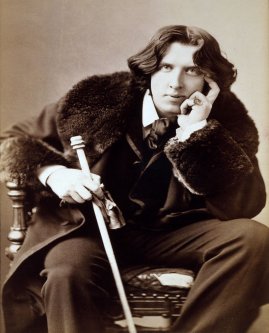
Oscar Wilde
Paradox with poise; style used as ethics, defense, and delight in public life.