Heart of Darkness
Heart of Darkness is a novella written by Joseph Conrad and published in 1899, possibly the best known work of this author. The book deals with issues of colonialism and clash of cultures, racism, and human violence in general.
The book is set on the Congo River in Africa and is narrated by the protagonist himself, Charles Marlow, who takes a steamboat up the river for a Belgian trading company and becomes fixated on Kurtz, the company's most successful ivory agent, at the farthest station. Joseph Conrad drew heavily on the dramatic and violent situation in the Congo colonized by King Leopold II of Belgium. Joseph Conrad himself commented after his trip to the Congo that the trip undoubtedly represented a descent into hell for him.
The book explores the roots of human nature, and what it finds is uncomfortable: the civilization the traders believe they are carrying with them turns out to be a thin covering over the violence they practice.
The Modern Library ranked this book 67th on their list of the 100 best novels in English of the twentieth century.
Your download has started
PDF · Heart of Darkness — didn't start? Download again
Also available: PDF · EPUB · MOBI · Read online
Read it on a Kindle
Download the EPUB and send it with Amazon's Send to Kindle (web, app, or your kindle.com email). Modern Kindles accept EPUB directly — no conversion needed.
On iPhone or iPad
Tap the downloaded file, then "Open in Books". It opens in Apple Books, with your reading progress synced across your devices.
On Android
Open the file with Google Play Books or any EPUB reader (ReadEra, Moon+ Reader). PDFs open in any viewer.
On your computer
PDFs open anywhere. For EPUB, try Calibre or Thorium Reader — both free and excellent.
Public domain (US)·No sign-up·DRM-free·Real text, not scans
Copyright note. Heart of Darkness by Joseph Conrad is believed to be in the public domain in the United States only. It may still be copyrighted in other countries. If you are not in the United States, please check your local laws to ensure this eBook is in the public domain in your country before downloading Heart of Darkness in PDF or EPUB.
- Pages
- 93
- Reading time
- 3 hours 14 minutes
- Pace
- Intermediate
- First published
- 1899
- Language
- English
- Downloads
- 4,651
127 years later, still timely
Why Read Heart of Darkness in 2026?
Supply chains promise efficiency; behind them are rivers, labor, and silence. "Heart of Darkness" reads like a field report on euphemism and extraction. Marlow's story is less about distance than about looking: how polished words like "trade" and "progress" can cover harm, and how an organization meets targets while losing its soul.
Today's connection
Use it to audit our own language in reports, sustainability claims, and leadership talk. The novella compresses colonial history into a method of attention. It resists simple heroes and asks instead for responsibility. You finish alert to where the profit is, and where the shadow falls.
Language as camouflage
The book shows how clichés and mission statements can hide violence in plain sight. Reading becomes an exercise in decoding what institutions refuse to name.
The charisma trap
Magnetic figures draw devotion while hollowing meaning. The story cautions against confusing intensity with truth or leadership with goodness.
See the system, not the hero
Rivers, stations, ledgers—the machinery matters more than any single character. The lens shifts from adventure to accountability.
These collections include Heart of Darkness
Movies based on books
Every book here names the film it became, and links to it. Read the book before, or after, the version you have seen.
Explore the collection →
Indispensable High School Reads
Four years of assigned reading, sorted by how long each book will take you — and a straight answer about the ones you will have to borrow.
Explore the collection →

The greatest villains in classic literature
The Telegraph picked the 50 greatest villains in literature. These are the ones old enough to be free — and the ones that are not.
Explore the collection →


The Modern Library: 100 Best Novels
The 1998 list, in its own order — and which of the hundred we can legally give you.
Explore the collection →


Classics Under 100 Pages
Short enough to finish today — and none of them minor. Page count and reading time on every card.
Explore the collection →Share this book
About the author
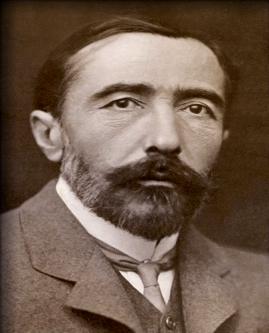
Joseph Conrad
Sea, empire, and conscience in a prose that listens to ambiguity and cost.