Number one
Ulysses
One day in Dublin, 16 June 1904, in about 260,000 words. It is the book the board put first and the one most people own without finishing; the Circe and Penelope episodes are where readers either give up or convert.
Collection · The Modern Library list of 1998
In 1998 the editorial board of the Modern Library ranked the hundred best English-language novels of the twentieth century. The list was argued about immediately and has been ever since, which is the only real evidence that it was worth making.
This page is not our selection. It is that list, in its own order, with the books we can legally offer. Copyright is what decides how much of it you see: the ranking reaches as far as 1983, and United States terms keep almost everything published after 1930 out of reach for now.
Every entry carries the number the board gave it. Where a title is missing from a run, it is protected, not overlooked.
Membership here is not an editorial judgement of ours. A book is on this page because it is on the Modern Library list and because it is in the public domain in the United States.
The public-domain column of the original list was checked title by title against United States terms in August 2026, and its dates had not been revisited: As I Lay Dying, marked as unavailable, has been free since 1 January 2026. It is here, at number thirty-five.
Where the board listed a sequence as a single entry — Parade's End is four novels — we show the volumes we hold under that one number, and say how many are missing.
Ranking as published by the Modern Library editorial board in 1998. Public-domain status is checked against United States copyright terms: works published in 1930 or earlier are already free, and anything later enters the public domain on the first of January after its ninety-fifth year.
Five of the ten, free to download
Of the ten the board put at the top, five are in the public domain and all five are here — including the book they placed first. The other five are Lolita, Brave New World, Catch-22, Darkness at Noon and The Grapes of Wrath, and every one of them is still protected.
Number one
One day in Dublin, 16 June 1904, in about 260,000 words. It is the book the board put first and the one most people own without finishing; the Circe and Penelope episodes are where readers either give up or convert.
A hundred and forty pages against Ulysses' six hundred and seventy-two, and the board still put them one and two. Fitzgerald died believing it had failed.
Joyce twice in the top three. This is the readable one: Stephen Dedalus from infancy to the decision to leave Ireland, with the prose growing up as he does.
Free since 2025
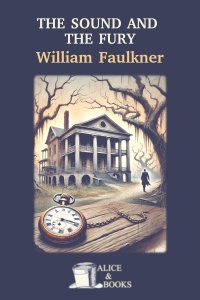
Three narrators, the first of whom cannot follow time, and then a fourth section in the third person that explains what you have been reading. The opening is famously hard.
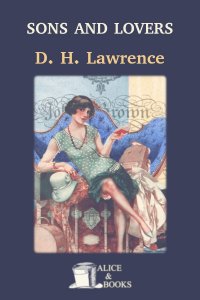
Lawrence's third novel and the one the board rated highest of his three on this list. A mother, the two of her four children the book is about, and a marriage she has given up on.
Five of the fifteen
This is where the copyright wall starts to bite: 1984, I Claudius, Under the Volcano and The Heart Is a Lonely Hunter are all in this run and none of them can be offered yet.
Butler wrote it, put it away, and left instructions that it appear after his death. Four generations of a family being ruined politely by their own religion.
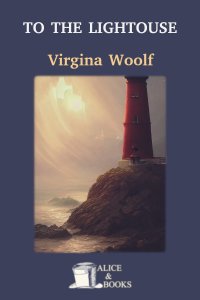
A house, a lighthouse across the bay, and ten years passing in about twenty pages in the middle. The best place to start with Woolf.
950 pages
Dreiser took a real murder case and spent nine hundred and fifty pages on it, more than any other book here, most of them on how a man argues himself into it. Sentence by sentence he writes badly and it does not matter.
Twenty-two linked stories about one small Ohio town, and the book that gave American fiction permission to be about ordinary failure. Hemingway and Faulkner both read it early.
Something happens in the Marabar Caves, or does not, and Forster refuses to settle it. His last novel: he lived another forty-six years and never published another.
Fourteen of the twenty-five
The best-covered stretch of the list. The board loaded this range with Edwardian and pre-war fiction — James, Conrad, Lawrence, Ford — which is exactly the period that has come out of copyright.
A dying heiress, the couple who plan to inherit from her, and James making you watch them be decent about it. The prose of his late period is already at full strength here.
James considered it his best. A middle-aged American is sent to Paris to retrieve a young man and slowly works out that the young man is right.
It opens by calling itself the saddest story ever heard, and the narrator spends the rest of it proving he never understood any of it. The unreliable narrator, close to its purest form.
The last of his three late novels and the hardest of them. A father and daughter, the two people they marry, and five hundred pages in which almost nothing is said directly.
Its publisher printed it and then declined to promote it, and Dreiser's career stalled for a decade. A country girl arrives in Chicago and does not get punished for what follows, which was the problem.
The list was out of date
The table this page used to carry gave 2026 as its unlock year and was never revisited. That date passed on 1 January. Fifteen narrators carry a coffin across Mississippi.
A bridge in Peru gives way with five people on it, and a friar spends the book asking whether that was a design. A hundred pages, and it won the Pulitzer.
Three households — one rich, one bookish, one poor — and a house that none of them quite deserves. "Only connect" is from this book, and Forster meant it as an instruction he was not sure anyone could follow.
Huxley before Brave New World, writing a novel of ideas in which a novelist inside it is writing the same novel. One of the characters is Lawrence, barely disguised.
Expatriates in Paris and Pamplona, drinking and going to the bullfights and not discussing the thing the whole book is about. His first full-length novel, after a short satire nobody reads.
A shabby anarchist cell in London and a bomb plot that goes wrong in the worst possible way. Conrad based it on a real attempt on Greenwich Observatory.
An invented South American republic, a silver mine and everyone who touches it. The most ambitious thing Conrad attempted and the one he found hardest to write.
Burned by court order
Three generations of a Midlands family. Its publisher was prosecuted in 1915 and over a thousand seized copies were destroyed; Women in Love, one place below, continues it.
The sequel to The Rainbow, and the board ranked it one place lower. Two sisters, two men, and Lawrence arguing that who you marry is a political position.
Seventeen of the fifty
The long tail, and the part of the list where the board's choices are least agreed on. It closes with the novel they ranked hundredth, which is on this page.
The only detective novel on the list. Hammett had been a Pinkerton operative, and it shows in how little anybody explains themselves.
Volume 1 of 4
The board listed Parade's End as one entry: four novels about Christopher Tietjens before, during and after the war. This is the first.
Volume 2 of 4
The second of the four, set at a base depot behind the line. We hold volumes one and two; A Man Could Stand Up and Last Post are not on the site yet.
Pulitzer 1921
Newland loves Ellen and marries May, and nothing improper is ever done. Old New York enforced itself without anyone raising their voice.
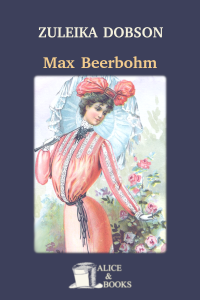
A comic novel in which the entire undergraduate body of Oxford kills itself for love of the same woman. Beerbohm wrote almost no fiction and this is why he is on the list.
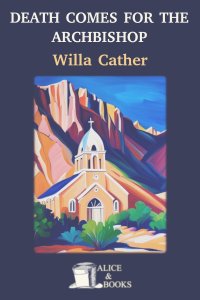
Two French priests build a diocese in New Mexico across forty years. Almost nothing happens dramatically, which Cather knew and intended.
Seven hundred pages, largely autobiographical, and the most honest thing on this page about wanting someone who is bad for you and knowing it.
93 pages
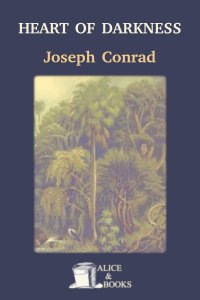
Ninety-three pages up a river. Everything written about colonialism in English fiction since has had to go through it.
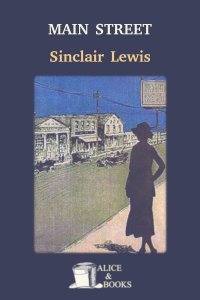
A woman with ideas marries a doctor in a small Minnesota town and tries to improve it. Lewis was the first American to win the Nobel in literature, largely on this.
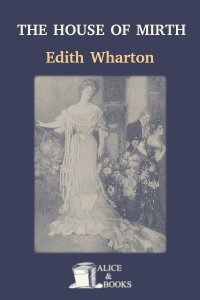
Lily Bart is twenty-nine and running out of money and time at the same rate. Each match she fails to close leaves her worse off than the last.
Children taken by pirates who turn out to be far more dangerous than the pirates. Hughes writes them without a shred of sentimentality.
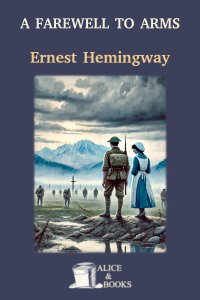
An ambulance driver on the Italian front and the nurse he leaves it for. Hemingway rewrote the final page thirty-nine times.
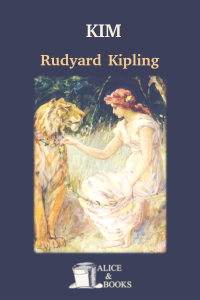
An orphan in Lahore is drawn into the intelligence war between Britain and Russia. Kipling's best novel and the one his politics interfere with least.
Lucy is engaged to a man with no blood in him and kissed by one with too much. The lightest book on this page, and Forster lets her choose.
A young officer abandons a ship full of pilgrims that he is sure is going down and spends the rest of his life somewhere else, trying to be the man he thought he was.
735 pages
Two sisters in a Staffordshire pottery town, followed from girlhood to death. Bennett's subject is time passing and nothing else, and he gives it seven hundred and thirty-five pages.
A dog is stolen from a California ranch and taken to the Klondike. Eighty-three pages — the shortest book on this page — and the only one on the list that most readers first met as a child.
Number one hundred
The book the board ranked last, and it won the Pulitzer in 1919. A rich Midwestern family is overtaken by the automobile business it looked down on.
The six best known of the eight missing from the top fifteen
The most conspicuous absences, all from the upper reaches of the ranking. Each year below is calculated from the date of first publication.
Unlocks January 2051
Turned down by five American publishers and first printed in Paris by a house that mostly sold pornography.
Unlocks January 2028
Point Counter Point, four years earlier, is on this page. This is the one everyone means.
Unlocks January 2057
Its first chapter appeared in a magazine as Catch-18; the number had to change before publication because Leon Uris brought out Mila 18.
Unlocks January 2035
Banned and burned in Kern County, California — the place it describes — four months after it appeared.
Unlocks January 2045
Orwell finished it on Jura, already seriously ill, and died seven months after publication.
Unlocks January 2030
Graves said he wrote it for the money, and it bought him the freedom to write poetry for the rest of his life.