A Farewell to Arms
A Farewell to Arms is a novel written by Ernest Hemingway and first published in 1929.
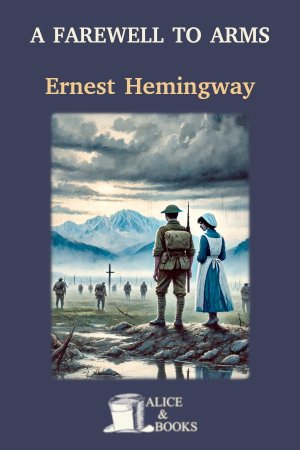
The novel, set during World War I, follows the story of Frederic Henry. He is an American ambulance driver serving with the Italian army. There, he falls in love with a British nurse named Catherine Barkley.
Amid the horrors of war, love becomes both a refuge and an escape, but it also puts their relationship to the test. With a spare and restrained style, Hemingway presents a story about love in times of war and the struggle against despair.
The novel is semi-autobiographical: Hemingway volunteered as an ambulance driver with the American Red Cross in Italy, where he was wounded and later drew on that experience for the book.
"In the late summer of that year we lived in a house in a village that looked across the river and the plain to the mountains. In the bed of the river there were pebbles and boulders, dry and white in the sun, and the water was clear and swiftly moving and blue in the channels."
Your download has started
PDF · A Farewell to Arms — didn't start? Download again
Also available: PDF · EPUB · Read online
Read it on a Kindle
Download the EPUB and send it with Amazon's Send to Kindle (web, app, or your kindle.com email). Modern Kindles accept EPUB directly — no conversion needed.
On iPhone or iPad
Tap the downloaded file, then "Open in Books". It opens in Apple Books, with your reading progress synced across your devices.
On Android
Open the file with Google Play Books or any EPUB reader (ReadEra, Moon+ Reader). PDFs open in any viewer.
On your computer
PDFs open anywhere. For EPUB, try Calibre or Thorium Reader — both free and excellent.
Public domain (US)·No sign-up·DRM-free·Real text, not scans
Copyright note. A Farewell to Arms by Ernest Hemingway is believed to be in the public domain in the United States only. It may still be copyrighted in other countries. If you are not in the United States, please check your local laws to ensure this eBook is in the public domain in your country before downloading A Farewell to Arms in PDF or EPUB.
- Pages
- 322
- Reading time
- 7 hours 26 minutes
- Pace
- Intermediate
- First published
- 1929
- Language
- English
- Downloads
- 2,800
97 years later, still timely
Why Read A Farewell to Arms in 2026?
War, love, weather, and sentences pared to the bone. Hemingway builds feeling by what he leaves out—and it hits hard.
Today's connection
Read it for restraint: dialogue that breathes, landscapes that carry mood, and courage shown quietly. It pairs with discussions on trauma, care, and the ethics of escape.
Love under pressure
Affection persists amid uncertainty and risk.
Front and hospital
Place determines choices; movement shapes fate.
Style as force
Simple words, exact rhythm—power without ornament.
These collections include A Farewell to Arms



Share this book
About the author

Ernest Hemingway
Clean lines, pressure under ice, and courage measured by action.