Collection · Curated by Alice

Banned books you can read for free

Each of these has an authority, a date and a reason attached. Where the famous story is wrong, the page says so.

22
books to download
1353–1928
575 years apart
PDF & EPUB
free, no sign-up

Every book on this page has a documented act attached to it — or, in the last section, a documented absence: a judge, a customs officer, a bishop, a library committee, a papal index. The entries name which one, and when.

That sounds like a low bar, and it is not. Banned-book lists are the most unreliable genre on the internet, because they copy each other rather than the record. Seven titles were removed from this page in August 2026 for exactly that reason, and three of them because the story everyone repeats turns out to be false.

The reasons rarely age well, which is the point of reading them now. What one generation found unpublishable, the next assigns in school — Huckleberry Finn has been on both lists.

How this list was built

One rule: we have to be able to name what happened. Which authority, which year, which stated reason. A book that was disliked, badly reviewed or turned down by a publisher does not belong on a page about banning, however uncomfortable its reception was.

Applying that took the collection from twenty-nine titles to twenty-two. Frankenstein, Dracula, The Scarlet Letter and Moll Flanders left because no censorship of them could be documented. Sister Carrie, The Awakening and Anthem left because the famous story about each is contradicted by the record: Doubleday printed Sister Carrie and simply did not advertise it, The Awakening was never technically banned, and Anthem was turned down by American publishers, which is commerce, not censorship. All seven are still on the site.

The last section is the one to read if you only read one. It holds the books where the ban hit something else — the author, the idea, the serial — and says so.

Start here: the ones that went to court

Six books with a court, a date and a verdict

These are the strongest entries on the page, because a trial leaves a record. Three of them changed what could legally be printed in English, and one of them sent a publisher to prison at sixty-eight.

Start here

Ulysses

James Joyce

1922 · 672 pages · ~22 hours 18 minutes

The Little Review, which serialised it, was raided in 1920, and its two editors, Margaret Anderson and Jane Heap, were convicted and fined at trial in February 1921. The book stayed illegal in the United States until Judge Woolsey read it and ruled it was not obscene — «emetic» in places, he wrote, but not an aphrodisiac.

Cleared United States v. One Book Called Ulysses, 6 December 1933 Source
Get the book

Lady Chatterley's Lover

D. H. Lawrence

1928 · 324 pages · ~9 hours 48 minutes

Lawrence published it himself in Florence in 1928 because no publisher would take it unexpurgated. When Penguin finally did, in 1960, the Crown prosecuted. The prosecutor asked the jury whether it was a book «that you would even wish your wife or your servants to read», and the question is now better remembered than the verdict.

Acquitted R v Penguin Books Ltd, Old Bailey, 1960 Source

Get the book

Two centuries in court

Fanny Hill

John Cleland

1749 · 225 pages · ~7 hours 7 minutes

Written in 1749 and still being litigated in the 1960s. In 1966 the United States Supreme Court freed it: three justices held that a book cannot be banned unless it is utterly without redeeming social value — the test from Roth, sharpened on this book.

Cleared Memoirs v. Massachusetts, U.S. Supreme Court, 1966 Source

Get the book

Convicted in absentia

Rights of Man

Thomas Paine

1791 · 280 pages · ~7 hours 55 minutes

Paine answered Burke on the French Revolution: fifty thousand copies were circulating within two months, and sales ran towards a million before the Crown moved. He was convicted of seditious libel in December 1792 and never served a day, having already left for France.

Convicted Seditious libel, Britain, 1792 Source

Get the book

His publisher went to prison

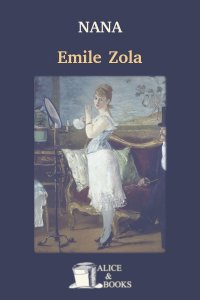
Nana

Émile Zola

1880 · 449 pages · ~14 hours 27 minutes

Henry Vizetelly is the reason Zola exists in English, and it ruined him. He was fined a hundred pounds in 1888 for publishing Zola's La Terre, and when he carried on he was fined two hundred more and jailed for three months in 1889, at sixty-eight. His firm went bankrupt the following year.

Publisher jailed Obscene libel, London, 1889 Source

Get the book

Banned by the Church

The Index Librorum Prohibitorum ran from 1559 to 1966. Three books here were on it, and two of them were on the very first list.

On the first Index

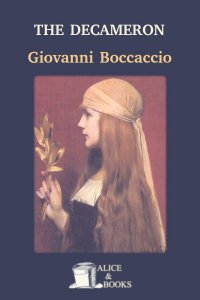
The Decameron

Giovanni Boccaccio

1353 · 756 pages · ~25 hours 29 minutes

One of the original entries on the Index of 1559. Gregory XIII commissioned a cleaned-up version in 1573 in which the clergy were rewritten as ordinary laypeople; the future Sixtus V, then still a cardinal, judged even that too immoral and had it done again — Salviati's edition of 1582.

Banned Index Librorum Prohibitorum, 1559 Source

Get the book

Banned three times over

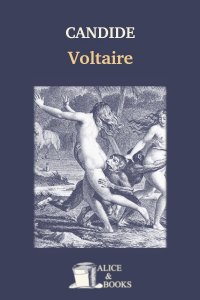
Candide

Voltaire

1759 · 117 pages · ~3 hours 11 minutes

Banned by the Grand Council of Geneva and by the Paris authorities within weeks of publication in 1759, and put on the Index in 1762. In February 1929 a Boston customs officer seized copies on their way to a Harvard French class; they were released that August, after the course had finished.

Banned, then seized Geneva and Paris 1759 · Index 1762 · U.S. Customs 1929 Source

Get the book

Banned by law

Three books, four jurisdictions, three unrelated reasons — and none of them the one you would guess. One of the three was never the subject of a decree at all: it was simply illegal to print for seventy-nine years.

Illegal until 1962

Kama Sutra

Vātsyāyana

206 pages · ~5 hours 14 minutes

Burton could not legally publish his 1883 translation, so he invented a publisher — «The Kama Shastra Society of London and Benares» — and declared it for private circulation only. It remained illegal to publish in Britain and the United States for seventy-nine years, and became one of the most pirated books in English.

Illegal to publish Britain and the United States, 1883 to 1962 Source

Get the book

The Jungle

Upton Sinclair

1906 · 379 pages · ~12 hours 34 minutes

Sinclair wrote it to expose what the meatpacking industry did to its workers and, in his words, hit the public in the stomach instead: the outrage was about the food. East Germany banned Sinclair's work in 1956 as inimical to Communism, which was not the objection he expected either.

Banned East Germany, 1956 Source

Get the book

Taken off the shelf

No trial, no verdict — a librarian, a bookseller or a district attorney deciding on their own. Historically this has removed far more books from far more readers than any trial.

The Adventures of Huckleberry Finn

Mark Twain

1884 · 293 pages · ~9 hours 17 minutes

The Concord Public Library committee threw it out in 1885, calling it «the veriest trash», «rough, coarse and inelegant» and more suited to the slums than to respectable people. Brooklyn followed in 1905. A century later it was being removed for the opposite reason, its racial language.

Removed Concord Public Library, Massachusetts, 1885 Source

Get the book

It sold out in a day

Leaves of Grass

Walt Whitman

1855 · 817 pages · ~10 hours 45 minutes

The Boston district attorney wrote to Whitman's publisher on 1 March 1882 calling the book obscene literature and demanding poems be removed. Whitman refused every single cut. His publisher dropped him, he found another, and the new edition sold out its first printing in one day.

Suppressed Boston district attorney, 1 March 1882 Source

Get the book

Not banned, exactly

The six where the popular story is wrong

Every one of these appears on banned-book lists. None of them was banned in the way the lists imply. What actually happened is in each note, and in most cases it is stranger than the version that gets repeated.

A bishop, not a ban

Jude the Obscure

Thomas Hardy

1895 · 407 pages · ~12 hours 24 minutes

Walsham How, Bishop of Wakefield, was said to have burned his copy, and one reviewer renamed it Jude the Obscene. Hardy's comment was that after the reviews «its next misfortune was to be burnt by a bishop — probably in his despair at not being able to burn me». No state ever banned it; what it got was the trade's own squeamishness — some booksellers sold it in brown paper bags.

Reportedly burned By the Bishop of Wakefield, 1890s Source

Get the book

A mob, and one law

Uncle Tom's Cabin

Harriet Beecher Stowe

1852 · 507 pages · ~15 hours 11 minutes

The claim that the whole South outlawed it by name is repeated everywhere and rests on no such statute. What is documented is narrower and far worse: a bookseller in Mobile was driven out of town for selling it, Stowe was sent a package containing a slave's severed ear, and in 1857 Maryland sentenced Samuel Green, a free Black preacher, to ten years for owning a copy under an 1841 law against abolitionist writing. He served five.

Owner jailed Maryland, 1857 — ten years for possessing a copy Source

Get the book

Censored by its own author

Tess of the D'Urbervilles

Thomas Hardy

1891 · 439 pages · ~12 hours 33 minutes

To get it printed at all, Hardy cut and rewrote it for its 1891 serialisation in The Graphic, and published the chapters «more especially addressed to adult readers», as he put it, separately in two other magazines. The full text came with the book. Nobody banned this novel; its author pre-emptively banned parts of it himself.

Expurgated For serialisation in The Graphic, 1891 Source

Get the book

The author, not the book

The Metamorphosis

Franz Kafka

1915 · 49 pages · ~1 hour 51 minutes

Kafka's name was on the Nazi lists, and that is the documented fact — not a ban on this particular story. He died in 1924, his throat too ruined by tuberculosis to let him eat, having asked Max Brod to burn his unpublished papers. Brod refused, which is why we have The Trial and The Castle; this one Kafka published himself, in 1915.

Author banned Nazi Germany, from 1933 Source

Get the book

The author, not the book

The Call of the Wild

Jack London

1903 · 83 pages · ~2 hours 40 minutes

Jack London was among the American writers whose work the Nazis burned, alongside Hemingway, Dos Passos and Helen Keller. The often-repeated claim that this particular novel was banned in Italy and Yugoslavia in 1929 is not something we could document anywhere.

Author burned Nazi Germany, 1933 Source

Get the book

The idea, not the volume

The Origin of Species

Charles Darwin

1859 · 544 pages · ~17 hours 13 minutes

Nobody made this book illegal to own. Tennessee made it illegal to teach: the Butler Act of 1925 forbade teaching that humans descended from lower animals, produced the Scopes trial that summer, and stayed on the books until 1967. The man who wrote the law said he had never known anything about evolution when he introduced it.

Teaching banned Butler Act, Tennessee, 1925 to 1967 Source

Get the book

Enjoyed this collection? Share it!