Uncle Tom's Cabin
Uncle Tom's Cabin is a historical novel written by Harriet Beecher Stowe and originally published in 1852.
The novel tells the story of Uncle Tom, a good and kind slave who belongs to a kind master. However, his master has financial problems and is forced to sell Tom.
Tom is sold down the river. He is bought first by the kindly St. Clare of New Orleans, whose daughter Eva befriends him, and after their deaths by Simon Legree, on whose Louisiana plantation he is worked and finally beaten to death for refusing to betray two women who have escaped. A second strand follows Eliza, who runs north across the ice of the Ohio to keep her child out of the hands of the same trader.
The novel did more than any other book to turn Northern opinion against slavery in the decade before the Civil War. It has also been criticized ever since for the meekness of its title character, whose name ended up being used as an insult.
"Late in the afternoon of a chilly day in February, two gentlemen were sitting alone over their wine, in a well-furnished dining parlor, in the town of P——, in Kentucky. There were no servants present, and the gentlemen, with chairs closely approaching, seemed to be discussing some subject with great earnestness."
Your download has started
PDF · Uncle Tom's Cabin — didn't start? Download again
Also available: PDF · EPUB · MOBI · Read online
Read it on a Kindle
Download the EPUB and send it with Amazon's Send to Kindle (web, app, or your kindle.com email). Modern Kindles accept EPUB directly — no conversion needed.
On iPhone or iPad
Tap the downloaded file, then "Open in Books". It opens in Apple Books, with your reading progress synced across your devices.
On Android
Open the file with Google Play Books or any EPUB reader (ReadEra, Moon+ Reader). PDFs open in any viewer.
On your computer
PDFs open anywhere. For EPUB, try Calibre or Thorium Reader — both free and excellent.
Public domain (US)·No sign-up·DRM-free·Real text, not scans
Copyright note. Uncle Tom's Cabin by Harriet Beecher Stowe is believed to be in the public domain in the United States only. It may still be copyrighted in other countries. If you are not in the United States, please check your local laws to ensure this eBook is in the public domain in your country before downloading Uncle Tom's Cabin in PDF or EPUB.
- Pages
- 507
- Reading time
- 15 hours 11 minutes
- Pace
- Intermediate
- First published
- 1852
- Language
- English
- Downloads
- 3,789
174 years later, still timely
Why Read Uncle Tom's Cabin in 2026?
A popular novel that moved politics, Stowe’s book weds narrative urgency to moral argument. It is powerful, sentimental, and of its time—both historic catalyst and text to read critically. Its most enduring lesson is empathy made active, not passive.
Today's connection
Debates on representation and reform still hinge on stories. This novel helps trace how culture shifts—and how to measure art’s effects.
Cultural impact
Fiction that shook policy.
Moral imagination
Feeling translated to action.
Read critically
See limits and legacy.
These collections include Uncle Tom's Cabin

Inspiring female writers
Voices that transformed literature—women authors redefining form, freedom, and the lives of their characters.
Explore the collection →
Indispensable High School Reads
Four years of assigned reading, sorted by how long each book will take you — and a straight answer about the ones you will have to borrow.
Explore the collection →


Banned Classic Books
Each of these has an authority, a date and a reason attached. Where the famous story is wrong, the page says so.
Explore the collection →Share this book
About the author
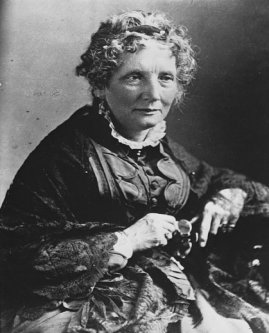
Harriet Beecher Stowe
Vivid moral urgency; fiction that changed public feeling about slavery and law.