The Hunchback of Notre Dame
The Hunchback of Notre Dame is a novel written by Victor Hugo and originally published in 1831. It is set in the city of Paris in the late fifteenth century at the height of the transition from the Middle Ages to the Modern Age.
The novel revolves around the majestic cathedral of Notre Dame de Paris and a special man who lives there: Quasimodo. Quasimodo is a poor, hunchbacked bell-ringer who is rejected by society because of his grotesque appearance and takes refuge in the cathedral itself.
His life will intersect with that of the beautiful gypsy Esmeralda, who is the object of desire of powerful men.
The novel deals with themes of beauty, goodness and human cruelty. It provides an excellent context for getting to know the Cathedral of Notre Dame, showing all its architectural splendor and rich history, which is a great tribute to the Cathedral.
"Three hundred and forty-eight years, six months, and nineteen days ago to-day, the Parisians awoke to the sound of all the bells in the triple circuit of the city, the university, and the town ringing a full peal.
The sixth of January, 1482, is not, however, a day of which history has preserved the memory."
Your download has started
PDF · The Hunchback of Notre Dame — didn't start? Download again
Also available: PDF · EPUB · MOBI · Read online
Read it on a Kindle
Download the EPUB and send it with Amazon's Send to Kindle (web, app, or your kindle.com email). Modern Kindles accept EPUB directly — no conversion needed.
On iPhone or iPad
Tap the downloaded file, then "Open in Books". It opens in Apple Books, with your reading progress synced across your devices.
On Android
Open the file with Google Play Books or any EPUB reader (ReadEra, Moon+ Reader). PDFs open in any viewer.
On your computer
PDFs open anywhere. For EPUB, try Calibre or Thorium Reader — both free and excellent.
Public domain (US)·No sign-up·DRM-free·Real text, not scans
Copyright note. The Hunchback of Notre Dame by Victor Hugo is believed to be in the public domain in the United States only. It may still be copyrighted in other countries. If you are not in the United States, please check your local laws to ensure this eBook is in the public domain in your country before downloading The Hunchback of Notre Dame in PDF or EPUB.
- Pages
- 546
- Reading time
- 15 hours 29 minutes
- Pace
- Intermediate
- First published
- 1831
- Language
- French
- Downloads
- 4,901
195 years later, still timely
Why Read The Hunchback of Notre Dame in 2026?
A cathedral anchors a city of spectacle and pity. Hugo choreographs mobs, miracles, and misreadings to ask who deserves protection. Architecture, empathy, and fate pull hard; the ending lingers.
Today's connection
The novel makes buildings speak: bells, stones, and shadows shape choices as much as decrees. It is also a plea for seeing beyond appearances and for guarding the vulnerable from crowds hungry for drama. Read it for historical Paris, for grand set pieces, and for the moral that mercy must be organized, not wished.
Architecture as character
Space holds memory, power, and prayer.
Crowd psychology
Spectacle swallows judgment if unresisted.
Compassion with teeth
Protection requires structure, not sentiment.
These collections include The Hunchback of Notre Dame



Movies based on books
Every book here names the film it became, and links to it. Read the book before, or after, the version you have seen.
Explore the collection →
Classic Romance Novels Worth Reading
Love tested by money, class and time — including the six Austen novels and all seven the Brontë sisters wrote.
Explore the collection →Share this book
About the author
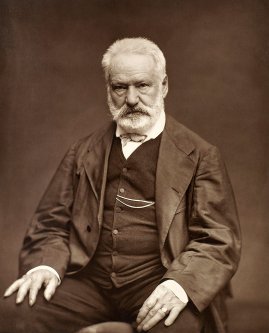
Victor Hugo
Huge hearted narratives where justice, imagination, and architecture meet.