Othello
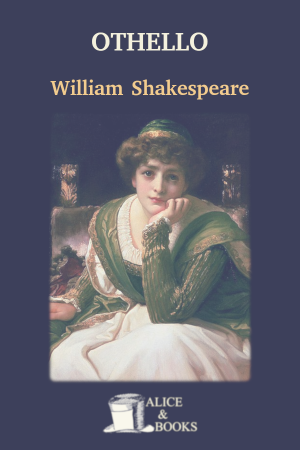
Othello is a tragedy written by William Shakespeare in 1565. It is considered to be one of his greatest tragedies.
The story revolves around its two main characters: Othello, a Moorish general in the Venetian army, and his traitorous midshipman, Iago.
The plot is inspired by the love and revenge story of Othello, a Venetian general, and Desdemona, the daughter of Senator Brabancio.
The story takes place in Venice and in a fictional city on Cyprus during the war between Venice and Turkey. Othello is a Venetian general of African descent, and Desdemona is his wife. The story is full of jealousy, suspicion, and betrayal, leading to the death of Othello, Desdemona, and other characters.
The central theme of the play is love, but it also deals with issues of race, religion, and war.
"RODERIGO:
Tush! never tell me; I take it much unkindly
That thou, Iago, who hast had my purse
As if the strings were thine, shouldst know of this.
IAGO:
'Sblood, but you will not hear me:
If ever I did dream of such a matter, Abhor me."
Your download has started
PDF · Othello — didn't start? Download again
Also available: PDF · EPUB · MOBI · Read online
Read it on a Kindle
Download the EPUB and send it with Amazon's Send to Kindle (web, app, or your kindle.com email). Modern Kindles accept EPUB directly — no conversion needed.
On iPhone or iPad
Tap the downloaded file, then "Open in Books". It opens in Apple Books, with your reading progress synced across your devices.
On Android
Open the file with Google Play Books or any EPUB reader (ReadEra, Moon+ Reader). PDFs open in any viewer.
On your computer
PDFs open anywhere. For EPUB, try Calibre or Thorium Reader — both free and excellent.
Public domain (US)·No sign-up·DRM-free·Real text, not scans
Copyright note. Othello by William Shakespeare is believed to be in the public domain in the United States only. It may still be copyrighted in other countries. If you are not in the United States, please check your local laws to ensure this eBook is in the public domain in your country before downloading Othello in PDF or EPUB.
- Pages
- 202
- Reading time
- 2 hours 19 minutes
- Pace
- Intermediate
- First published
- 1603
- Language
- English
- Downloads
- 5,220
423 years later, still timely
Why Read Othello in 2026?
A love story is derailed by a colleague who weaponizes trust. “Othello” turns jealousy, race, and rumor into relentless stage-momentum. It’s a masterclass in how language moves people—and how doubt corrodes quickly. Read it to build manipulation literacy and compassion.
Today's connection
Few plays show persuasion so nakedly: flattery, planted questions, staged “proof,” and public theater. Othello also asks how institutions read outsiders and how private insecurity becomes public harm. For modern audiences, it clarifies red flags—performative loyalty, forced binaries, false urgency—without losing empathy for pain. Watch or read it to study rhetoric, to discuss bias and belonging, and to ask how communities can interrupt corrosive talk before it becomes action. The tragedy lands because the mechanisms still work.
Language as leverage
Questions and insinuations do more damage than accusations.
Jealousy and justice
Private fear can warp public judgment—name the slide.
Outsider pressure
Race and rank shape how evidence is heard.
These collections include Othello
Indispensable High School Reads
Four years of assigned reading, sorted by how long each book will take you — and a straight answer about the ones you will have to borrow.
Explore the collection →

The greatest villains in classic literature
The Telegraph picked the 50 greatest villains in literature. These are the ones old enough to be free — and the ones that are not.
Explore the collection →Share this book
About the author

William Shakespeare
Electric language and living characters; forms that still teach rhythm, wit, and range.