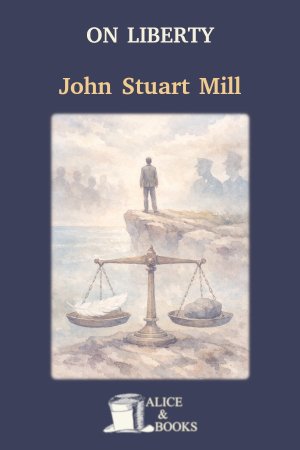
On Liberty
On Liberty is an essay by John Stuart Mill first published in 1859.
In this work, Stuart Mill offers one of the classic defenses of individual freedom against social and political oppression. Mill is concerned not only with the power of governments, but also with the subtle pressure of public opinion and social norms that can stifle originality and independence of thought.
At the heart of the book is Mill’s famous “harm principle”: the idea that the only legitimate reason for society or the state to restrict someone’s freedom is to prevent harm to others, not to protect people from themselves, enforce morality, or impose majority preferences. As long as a person’s actions affect only themselves, Mill argues, they should be free to act as they choose.
Mill devotes special attention to freedom of thought and expression, insisting that even false or unpopular opinions should be allowed to circulate. Suppressing an opinion, he argues, robs society of the chance either to replace error with truth or to understand the truth more deeply by confronting objections. Open debate and diversity of viewpoints are therefore essential to human progress.
"The subject of this Essay is not the so-called Liberty of the Will, so unfortunately opposed to the misnamed doctrine of Philosophical Necessity; but Civil, or Social Liberty: the nature and limits of the power which can be legitimately exercised by society over the individual."
Your download has started
PDF · On Liberty — didn't start? Download again
Also available: PDF · EPUB · Read online
Read it on a Kindle
Download the EPUB and send it with Amazon's Send to Kindle (web, app, or your kindle.com email). Modern Kindles accept EPUB directly — no conversion needed.
On iPhone or iPad
Tap the downloaded file, then "Open in Books". It opens in Apple Books, with your reading progress synced across your devices.
On Android
Open the file with Google Play Books or any EPUB reader (ReadEra, Moon+ Reader). PDFs open in any viewer.
On your computer
PDFs open anywhere. For EPUB, try Calibre or Thorium Reader — both free and excellent.
Public domain (US)·No sign-up·DRM-free·Real text, not scans
Copyright note. On Liberty by John Stuart Mill is believed to be in the public domain in the United States only. It may still be copyrighted in other countries. If you are not in the United States, please check your local laws to ensure this eBook is in the public domain in your country before downloading On Liberty in PDF or EPUB.
- Pages
- 123
- Reading time
- 4 hours 25 minutes
- Pace
- Intermediate
- First published
- 1859
- Language
- English
167 years later, still timely
Why Read On Liberty in 2026?
Mill's target is not only the state - it is the quiet tyranny of majority opinion. His harm principle draws one clean line: your freedom ends where injury to others begins. The chapters on free expression argue that even wrong opinions earn their keep by testing true ones.
Today's connection
Arguments over speech, platforms, and social conformity run straight through Mill's questions. He hands you a framework instead of a side.
Harm principle
One line for liberty.
Speech defended
Error sharpens truth.
Majority pressure
Conformity as soft power.
Share this book
About the author
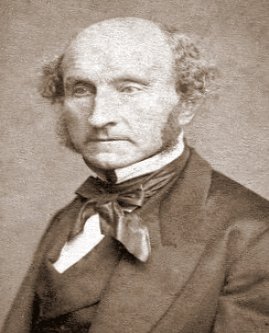
John Stuart Mill
Liberal philosopher of liberty and logic; tests power, rights, and education with calm force.