Totem and Taboo
Totem and Taboo is a philosophical and anthropological work written by Sigmund Freud and originally published in 1913.
The essay is divided into four chapters or sections, through which Freud attempts to deal with anthropological issues using the method of psychoanalysis, with the aim of establishing an analogy between how primitive societies have developed and how the human psyche itself has developed on an individual level.
The very human conflict between desire and prohibition determines that there is a common origin of totemism and exogamy.
Freud tries to explain the taboo by which some ancient civilizations had a certain dread of incest. The psychologist explains how the totem is a figure that represents the union of a group and its family ties, and that within that group relationships were considered incestuous.
This digital edition of Sigmund Freud's Totem and Taboo is based on the English translation by Abraham Brill.
Your download has started
PDF · Totem and Taboo — didn't start? Download again
Also available: PDF · EPUB · MOBI · Read online
Read it on a Kindle
Download the EPUB and send it with Amazon's Send to Kindle (web, app, or your kindle.com email). Modern Kindles accept EPUB directly — no conversion needed.
On iPhone or iPad
Tap the downloaded file, then "Open in Books". It opens in Apple Books, with your reading progress synced across your devices.
On Android
Open the file with Google Play Books or any EPUB reader (ReadEra, Moon+ Reader). PDFs open in any viewer.
On your computer
PDFs open anywhere. For EPUB, try Calibre or Thorium Reader — both free and excellent.
Public domain (US)·No sign-up·DRM-free·Real text, not scans
Copyright note. Totem and Taboo by Sigmund Freud is believed to be in the public domain in the United States only. It may still be copyrighted in other countries. If you are not in the United States, please check your local laws to ensure this eBook is in the public domain in your country before downloading Totem and Taboo in PDF or EPUB.
- Pages
- 159
- Reading time
- 5 hours 15 minutes
- Pace
- Intermediate
- First published
- 1913
- Language
- German
- Downloads
- 2,939
113 years later, still timely
Why Read Totem and Taboo in 2026?
Freud leaves the couch for the campfire, tracing how families, myths, and prohibitions shape desire. Right or wrong, this is a provocative walk through early theories that still spark debate about culture and instinct.
Today's connection
Between pop psychology and anthropology, this book asks how stories govern behavior. Read critically: it is a historical document that still pushes useful questions.
Theory in the wild
Speculation that tests culture.
Ritual and rule
Group life shapes want.
Debate engine
Ideas to refine, not revere.
Share this book
About the author
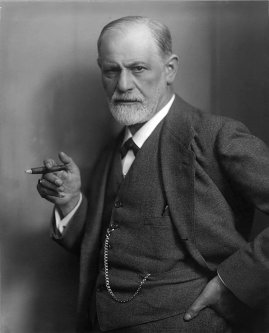
Sigmund Freud
A map of mind, desire, and dream that still frames questions of self and culture.