The Interpretation of Dreams
The Interpretation of Dreams is a book by Sigmund Freud, published in November 1899 but dated 1900.
In this work, Freud introduces his theory of the unconscious with respect to dream interpretation, and discusses what would later become the theory of the Oedipus complex.
Freud argues that dreams express unconscious wishes through a distinction between their remembered content and underlying thoughts. He develops a method for interpreting what dreams mean through free association and analysis.
Groundbreaking at the time, the work helped lay the foundations of modern psychoanalysis. Although many of Freud’s claims remain disputed, the book is historically important for understanding the development of psychoanalysis and modern ideas about the unconscious.
This edition of The Interpretation of Dreams is based on the translation by Abraham Arden Brill.
Your download has started
PDF · The Interpretation of Dreams — didn't start? Download again
Also available: PDF · EPUB · MOBI · Read online
Read it on a Kindle
Download the EPUB and send it with Amazon's Send to Kindle (web, app, or your kindle.com email). Modern Kindles accept EPUB directly — no conversion needed.
On iPhone or iPad
Tap the downloaded file, then "Open in Books". It opens in Apple Books, with your reading progress synced across your devices.
On Android
Open the file with Google Play Books or any EPUB reader (ReadEra, Moon+ Reader). PDFs open in any viewer.
On your computer
PDFs open anywhere. For EPUB, try Calibre or Thorium Reader — both free and excellent.
Public domain (US)·No sign-up·DRM-free·Real text, not scans
Copyright note. The Interpretation of Dreams by Sigmund Freud is believed to be in the public domain in the United States only. It may still be copyrighted in other countries. If you are not in the United States, please check your local laws to ensure this eBook is in the public domain in your country before downloading The Interpretation of Dreams in PDF or EPUB.
- Pages
- 585
- Reading time
- 19 hours 7 minutes
- Pace
- Intermediate
- First published
- 1899
- Language
- German
- Downloads
- 7,971
127 years later, still timely
Why Read The Interpretation of Dreams in 2026?
A dense, daring attempt to map the mind. Freud’s book launched a century of debate; read it as the origin story of dream analysis and a museum of memorable cases.
Today's connection
Treat it as history of ideas and a method to examine narratives, not a final science. Pair with contemporary psychology to see what lasted. Case-reading skills and curiosity are the real keepsakes.
Origins to know
Understand where modern talk about the unconscious began.
Reading cases
Follow evidence, metaphor, and association carefully.
Limits and updates
Use with modern research; keep what proves useful.
Share this book
About the author
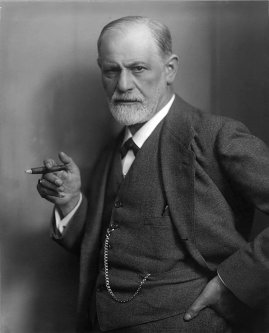
Sigmund Freud
A map of mind, desire, and dream that still frames questions of self and culture.