Phaedo
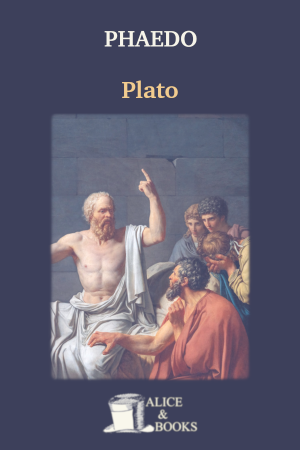
Phaedo, also subtitled "On the Soul", is a dialogue written by Plato in the 380s B.C. Its central theme is the immortality of the soul and is one of the Greek philosopher's best known dialogues.
Socrates is in his cell, condemned to drink hemlock, and is facing his last hours of life. He spends the day with his friends, giving them his reasons for accepting the death sentence instead of escaping.
Phaedo, one of his companions, was present and recounts the day afterwards to Echecrates. Plato notes that he himself was not there: he was ill.
Through his words, Socrates offers reassurance to his pupils that he will go to a better place and that the soul cannot be destroyed and is eternal.
This edition of Plato's Phaedo is based on the English translation by Benjamin Jowett.
Your download has started
PDF · Phaedo — didn't start? Download again
Also available: PDF · EPUB · MOBI · Read online
Read it on a Kindle
Download the EPUB and send it with Amazon's Send to Kindle (web, app, or your kindle.com email). Modern Kindles accept EPUB directly — no conversion needed.
On iPhone or iPad
Tap the downloaded file, then "Open in Books". It opens in Apple Books, with your reading progress synced across your devices.
On Android
Open the file with Google Play Books or any EPUB reader (ReadEra, Moon+ Reader). PDFs open in any viewer.
On your computer
PDFs open anywhere. For EPUB, try Calibre or Thorium Reader — both free and excellent.
Public domain (US)·No sign-up·DRM-free·Real text, not scans
Copyright note. Phaedo by Plato is believed to be in the public domain in the United States only. It may still be copyrighted in other countries. If you are not in the United States, please check your local laws to ensure this eBook is in the public domain in your country before downloading Phaedo in PDF or EPUB.
- Pages
- 124
- Reading time
- 3 hours 47 minutes
- Pace
- Intermediate
- First published
- -387
- Language
- Ancient Greek
- Downloads
- 2,636
2413 years later, still timely
Why Read Phaedo in 2026?
Anxious about mortality, meaning, or what a good life looks like beyond metrics and likes Phaedo offers calm reasoning in dialogue form. No jargon, just Socrates testing ideas with care, turning fear into clarity and conversation you can keep having with friends.
Today's connection
In an age that treats death as a taboo or a data point, Phaedo models how to ask steady questions, separate belief from proof, and keep dignity under pressure. Reading it today trains attention, improves discussion, and reframes anxiety into curiosity and practice.
Socratic method
Learn to question well, define terms, and follow arguments without personal attacks.
Facing mortality
Clear thinking about the soul and death reduces panic and moral drift.
Starter friendly classic
Short, dialogic, and perfect for a first serious step into philosophy.
Share this book
About the author
Plato
Dialogues that teach thinking; reason, myth, and civic life explored in living talk.